
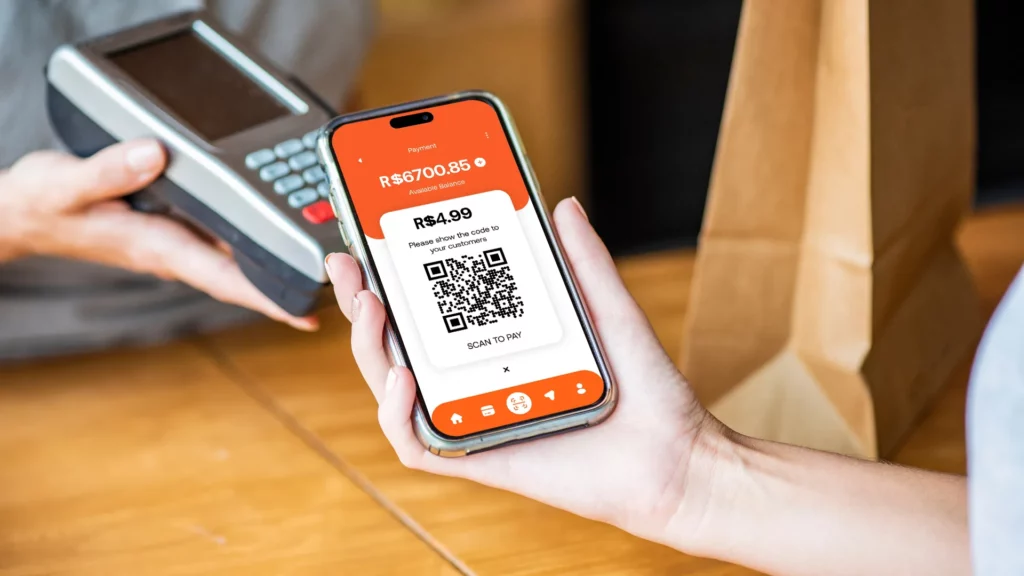
In the rapidly evolving landscape of Brazil’s payment infrastructure, Boku’s inclusion as a licensed Payment Institution puts it in a position to offer recurring, secure, and simple digital payments.
Payments solutions provider Boku will soon be operational in Brazil after the country’s central bank granted it Payment Institution authorisation as part of Latin America’s digital economy expansion. With this license, Boku will now be both a Payment Initiator and an E-money Issuer.
This will enable Boku to become an active participant in Brazil’s Open Finance framework and offer advanced Pix-based services, such as Pix Automático, from next year. Pix is the most widely used payment method in Brazil since its introduction in 2020.
This is a landmark moment for Boku as it expands operations in Brazil. In the rapidly evolving landscape of Brazil’s payment infrastructure, Boku’s inclusion as a licensed Payment Institution puts it in a position to offer recurring, secure, and simple digital payments. Customers without access to credit cards will particularly benefit from this, which will also promote financial inclusiveness.
Boku offering Pix-supporting services is yet another attractive feature, as over 76% of adults and 15 million businesses employ Pix services. Roughly 46% of all payments and nearly one-third of the total e-commerce transactions are facilitated through Pix. With its user-friendly interface, low costs and real-time functionality, it has quickly become a beloved payment platform across Latin America’s largest economy. Pix is particularly popular among younger users who prefer mobile-based banking solutions.
With its Payment Institution licence, Boku can authorise Pix Automático, elevating the local payment experience to the international level, greatly benefiting its merchant clientele. With Pix Automático, foreign platforms operating in Rio will be able to unlock the benefits already extended to the local payment service providers. Subscription-based businesses may increase conversion rates, streamline invoicing, and draw in new customers with recurring Pix payments.
The acquisition of this license aligns with Boku’s broader strategy of making alternative payment systems more accessible and also helping merchants localise their billing processes. Now that Boku has gained the Payment Initiator Service Provider (PISP) position, the payments solution provider can easily merge with Brazil’s Open Finance ecosystem and enable direct and non-direct Pix payments, organise the checkout procedure and enhance customer experience.
According to Boku CEO Stuart Neal, the company is committed to expanding local payments with the Pix Automático, proving that innovation can expand the scope of financial inclusion. Neal believes that Brazil is cutting the course, and that Pix Automático highlights the company’s goal of reaching a wider customer base and making everyday transactions easier and more inclusive.
Ricardo Amaral, VP, Latin America (LATAM) at Boku, said that Brazil is undergoing major digital transformation and that Boku is delighted to partake in this journey. The payment service provider is now targeting millions of customers who are not credit card holders and are still seeking easy and secure payment options. Boku is diverting all its focus towards implementing Pix Automático, and with the newly acquired BCB-issued Payment Institution licence, Amaral is confident that the service will be available to merchants as early as 2026. He also added that the company is committed to expanding and that Boku’s growth will be a model of digital transformation across Latin American countries.
Brazil is not the only country looking to widen its range for digital payments. Colombia, led by Bre-B, is set to launch its own payment model in September, inspired by Pix’s real-time payment model. Mexico and Argentina have also launched their individual payment solutions, incorporating QR codes interoperability, like Mexico’s DiMo and Argentina’s Transferencias 3.0.
The LATAM region is rapidly adopting a more diverse payment ecosystem and moving away from its reliance on cards. Boku’s new license is a step towards bringing internationalism into the Brazilian economy’s localised payment methods. In conclusion, this is just the first step towards the region’s digital payments transformation, which is bound to offer a huge boost to the economy very soon.