

The M&A market is now in an expansionary phase after US President Donald Trump’s tariff war had brought it to a halt in April.
While the popular opinion may be that the global economy is in a recessionary period, with investments drying up, the job market shrinking, and declining consumption, official data indicates otherwise. The global mergers and acquisitions (M&A) market has reached a staggering $2.6 trillion, the highest since 2021.
Analysts have attributed this growth to improved investor confidence, as corporate executives are willing to explore new opportunities and take on more risks, coupled with the surge in artificial intelligence (AI). This growth has defied expectations that global markets are shrinking amidst uncertainty surrounding the US tariffs.
Dealogic data disclosed that while the number of transactions for the first seven months of this year is 16% than the total transactions for the same period last year, their value is 28% higher. This has been attributed to various megadeals struck in the US, valued at over $10 billion. Last month, Anu Aiyengar, JPMorgan’s Global Head of Advisory, M&A, said that companies are no longer waiting for these uncertain times to pass; instead, board directors are encouraging more risk-taking.
The M&A market is now in an expansionary phase after US President Donald Trump’s tariff war had brought it to a halt in April. According to data compiled by JPMorgan, M&A volumes worldwide increased by 27% in the first six months of 2025, compared to last year, reaching $2.2 trillion, due to a 57% surge in the number of mega deals valued above $10 billion.
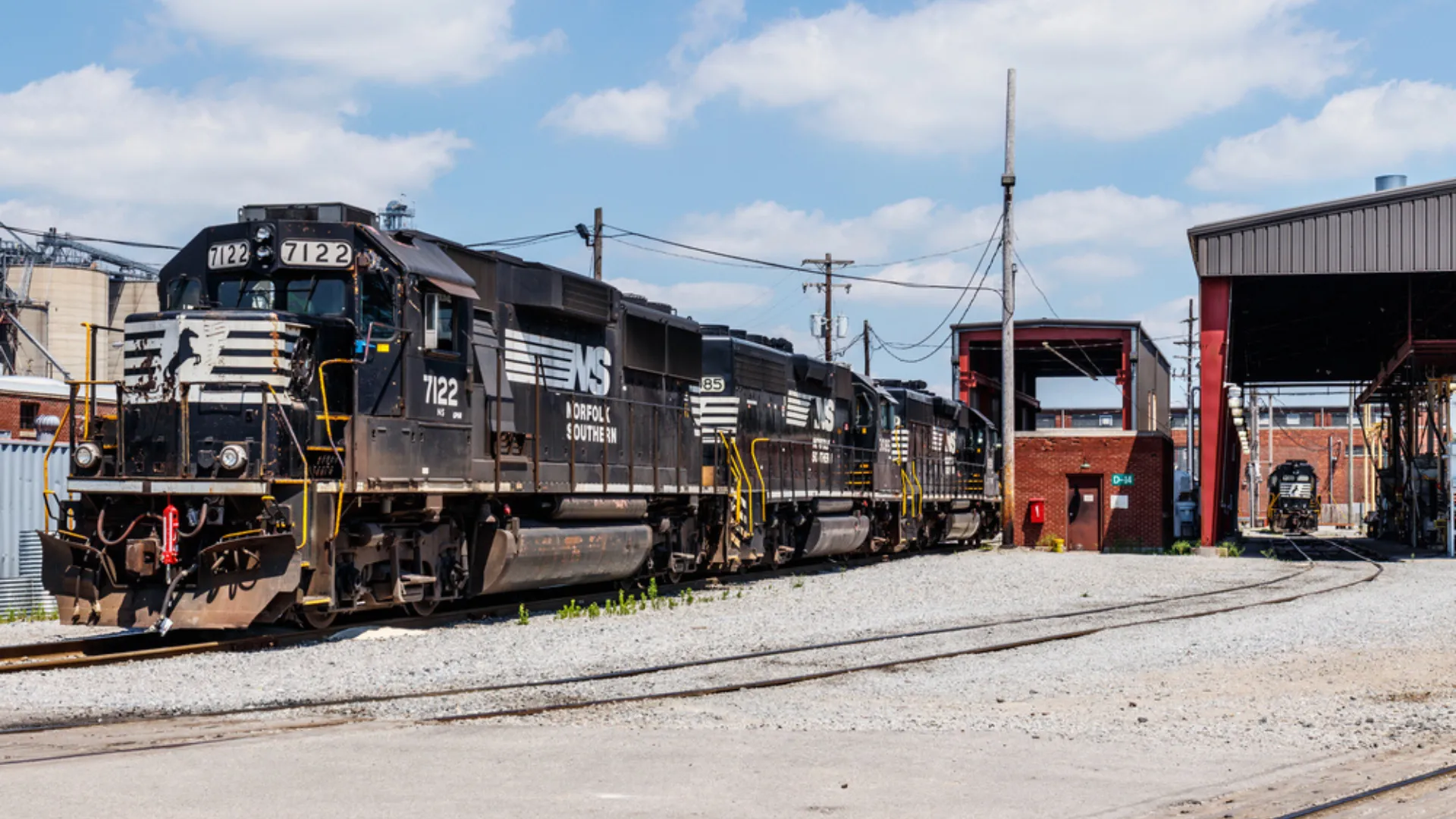
Among these deals is the Union Pacific Corp’s $85 billion acquisition of Norfolk Southern, which was announced last month. This proposed deal will create the first US coast-to-coast freight rail operator, facilitating smoother transfer of goods across the country. Should this deal be approved, it would constitute the biggest buyout in the railway sector, giving Union Pacific control not only of the western two-thirds of America but also Norfolk’s 31,400-km network that stretches across 22 eastern states.
Similarly, OpenAI revealed in April that it would raise $40 billion in a new funding round led by SoftBank Group, at a $300 billion valuation, to help expand AI research, strengthen computational infrastructure and augment its tools.
These high-profile deals are a relief to banks, which have spent the last few months with low lending and borrowing activities after companies halted deals, investments and spending owing to tariff uncertainty. Trump’s Liberation Day tariffs came as a rude shock to the banking and business sector after it was projected in December that global deal volumes would surpass $4 trillion with Trump’s promise of fewer regulations, lower corporate taxes and a more business-friendly administration.
Market analysts have pointed out that along with the AI drive, there is a domino effect in the market, with no company wanting to be left behind. Therefore, investments and mergers are on an uptrend. In 2021, in a post-lockdown rebound, the value of deals hit $3.57 trillion, which is 27% lower than this year’s total of $1 trillion. However, market observers are hopeful that in the later part of this year, companies will finalise bigger deals, having adapted to market volatility.
In the aftermath of the pandemic, it was the healthcare system which has since been supplanted by computer and electronic companies. Dealogic estimates that over the past two years, these tech companies have reported more takeover bids in the US and the United Kingdom (UK).
AI is also projected to bring in more M&As, with data centre-related dealmaking activities increasing. Recently, Samsung acquired Germany’s data centre cooling specialist FlaktGroup for $1.7 billion. Palo Alto Networks also struck a deal with Israeli cybersecurity company CyberArk for $25 billion, the biggest deal so far this year across the European and MENA region.
In conclusion, while the global economy has taken several hits in the past few months, board directors are no longer waiting for market stability to explore newer horizons. On the contrary, companies are taking the leap, which is in turn pumping more money into the market.