
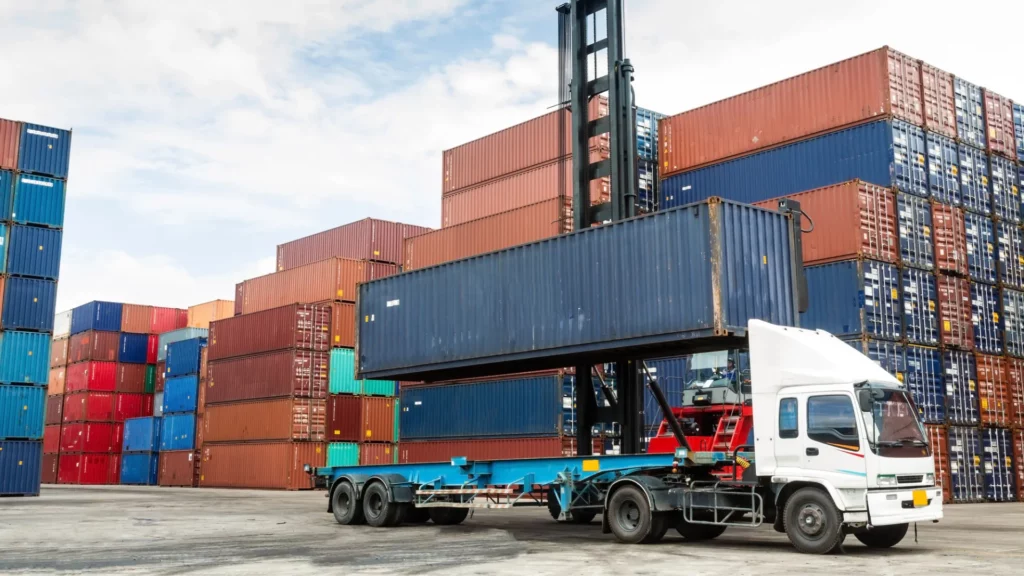
The IMF commended Saudi Arabia for achieving record-low unemployment levels, bringing inflation under control and also managing to expand its non-oil sector amidst global economic volatility.
In his bid to ‘protect’ and ‘strengthen’ the American economy, President Donald Trump is treating friends and foes alike, uncompromising on national interests. After the 90-day tariff pause was lifted, Trump’s new line-up of tariffs is shaking the global supply chain yet again.
While markets reeled and world leaders scrambled to do damage control when the Liberation Day tariffs were announced, this second round of tariffs and counter-tariffs has come as a relatively lower shock to the international economy. Most companies and countries have had time to enact contingency plans, and healthy, booming economies, in particular, are less likely to bear the brunt of the tax tornado.
The International Monetary Fund (IMF) has estimated that the tariffs imposed on long-time US ally, Saudi Arabia, could be next to zero. The IMF underscored that the Kingdom’s economy was performing well and therefore, it would be able to withstand global economic upheavals.
Riyadh has also got the better end of the deal, compared to most countries. In April, Trump announced that goods imported from Saudi Arabia would be subject to a 10% tariff, placing it in the lower tariff bracket. Moreover, more than three-quarters of Saudi exports are exempt from tariffs, which the IMF’s mission chief for the Middle East and Central Asia, Amine Mati, believes is the reason for low direct impact.
Mati explained that oil products dominate the Saudi-US trade, with non-oil products limited to merely 3-4% of the total trade volume. Therefore, he emphasised that the tariff impact would be next to negligible.
The Kingdom has prioritised economic diversification as part of its Vision 2030 goals to reduce its dependence on oil and gas revenues. On Monday, the IMF commended the country’s economy for achieving record-low unemployment levels, bringing inflation under control and also managing to expand its non-oil sector amidst global economic volatility.
The IMF estimated last week that Saudi Arabia’s economy would grow at a 3.6% pace this year and 3.9% in 2026, which will be made possible by phasing out OPEC production cuts. The Fund also projected the Kingdom’s non-oil sector to grow above 3.5% over the medium term this year. In 2024, the non-oil GDP grew by 4.5%, primarily attributed to retail, hospitality and construction.
In recent years, Saudi Arabia has hosted a number of major international events, and increased government-led projects have pushed up domestic demand. While demand has increased, the IMF has said that consumer prices are likely to remain unchanged.
As per the Fund’s annual assessment, Riyadh’s banking sector has experienced robust expansion courtesy of high capitalisation and profitability. Non-performing loans are also at their lowest in nearly a decade. Unemployment levels shrank and the service, industry and manufacturing sectors have expanded. The Washington-based lender also noted that unemployment rates among women and youth had reduced by half in the last four years.
Saudi Arabia’s current account deficit is likely to hover around 3% for the next few months, owing to investment-linked imports and remittance outflows despite consistent improvement in non-oil exports, said Mati. He also explained that risks arising from lower oil demand as a result of escalating global tensions, regional security threats and lower government spending are inevitable.
As part of its Vision 2030, Saudi Arabia is focusing on expanding its technological, real estate and tourism sectors. The IMF has admitted that the Kingdom’s technological sector is poised to gain significantly from developments in AI.
The IMF Board Directors are also in agreement that the Kingdom needs gradual fiscal consolidation to achieve intergenerational equity. Broader tax reforms to increase non-oil revenue, energy subsidies, social safety nets and streamlined non-essential expenditures are some measures which could facilitate intergenerational equity.