
South Korea’s President Lee Jae Myung has received Vietnam’s leader To Lam as his first guest since assuming office in June.
South Korea and Vietnam have pledged to strengthen their economic ties and strategic cooperation at the summit organised by both countries on Monday. With global economic challenges intensifying, countries are trying to reduce their reliance on the US, as President Trump has unleashed tariffs across Asia, Europe, Africa and the Americas.
South Korea’s President Lee Jae Myung has received Vietnamese leader To Lam as his first guest since assuming office in June. Both leaders have discussed approaches to improve cross-border trade and investment. Lam is the President’s first guest, as he is leading a delegation of ministers holding various portfolios like industry, technology, trade and external affairs. Parliamentarians and senior members of the Communist Party are also part of this delegation.
In a televised address, Lee expressed hope that with nearly 10,000 Korean companies operating in Vietnam, the two Southeast Asian countries will continue to nurture their strategic partnership to ensure mutually beneficial economic development, stable trade activities and deepened cooperation. Lam, who is the Vietnamese Communist Party’s General Secretary, said that Hanoi is keen to further open up its markets and expand trade up to $150 million by 2030 and facilitate more technological cooperation and investment opportunities from South Korea.
The President’s office confirmed that the summit will culminate in the signing of at least 10 MoUs which promise cooperation on nuclear and renewable energy, technology, monetary and financial policies and infrastructure, like an upcoming high-speed rail project. The office also said in its statement that this rare visit from the Vietnamese leaders is bound to pump up Seoul-based businesses to invest in nuclear energy and infrastructural projects across Vietnam.
Vietnam and South Korea are two of the biggest export hubs in Southeast Asia. For years, South Korean companies have used Vietnam to export their goods as the country offers tax incentives, has relatively lower labour costs and has numerous export-friendly free trade deals with other countries.
Moreover, according to Vietnam’s government records, Seoul’s companies have poured the largest volume of investment into the country, having pumped in approximately $92 billion, mainly into factories last year. South Korea’s investment in Hanoi has resulted in research centres being set up in the country, along with technological know-how being shared across borders.
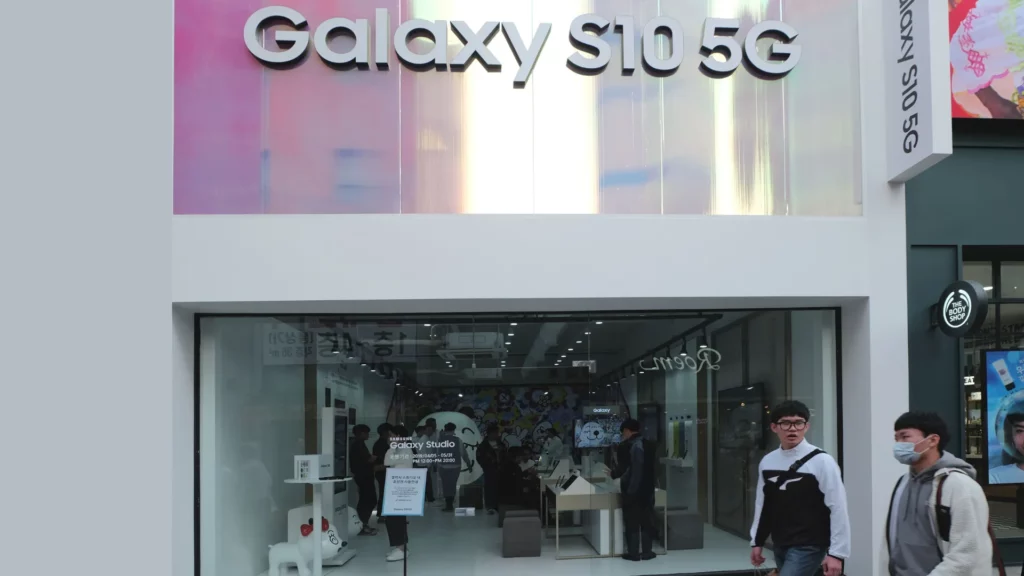
South Korean giant Samsung Electronics was a top investor in the country, and Vietnam is even home to the company’s largest overseas industrial operations. Samsung exports over half of its telephones from Vietnam, with a large portion of that being shipped to the US. It was reported last week that it appears as if Korean companies have reduced investments for 2025, as Vietnam’s government data shows that South Korea does not feature in the top seven investors for this year.
This contracting investment has been attributed to uncertainty arising from Trump tariffs. Washington has accused Vietnam of allowing Chinese exports to be shipped from its ports to help Beijing evade import duties. Similarly, most Chinese companies were also shifting their manufacturing base to Vietnam to avoid being hit with high tariffs, as China was the worst affected by the Trump tariffs.
While Vietnamese and US officials have negotiated a fairer deal, imports from Vietnam are still subject to 20% tariffs, and South Korean imports have been hit with 15% tariffs. Regardless, Vietnamese companies remain hopeful that any relocation would not be an immediate possibility, as it remains the more attractive option, as the tariff rates are not as high as those in other countries.
Therefore, the impact of the tariffs on trade and investment is yet to be determined. Moreover, even after the tariffs were announced, South Korean companies remain listed as potential investors in nuclear energy, LNG power plants and high-speed rail projects in Vietnam.