
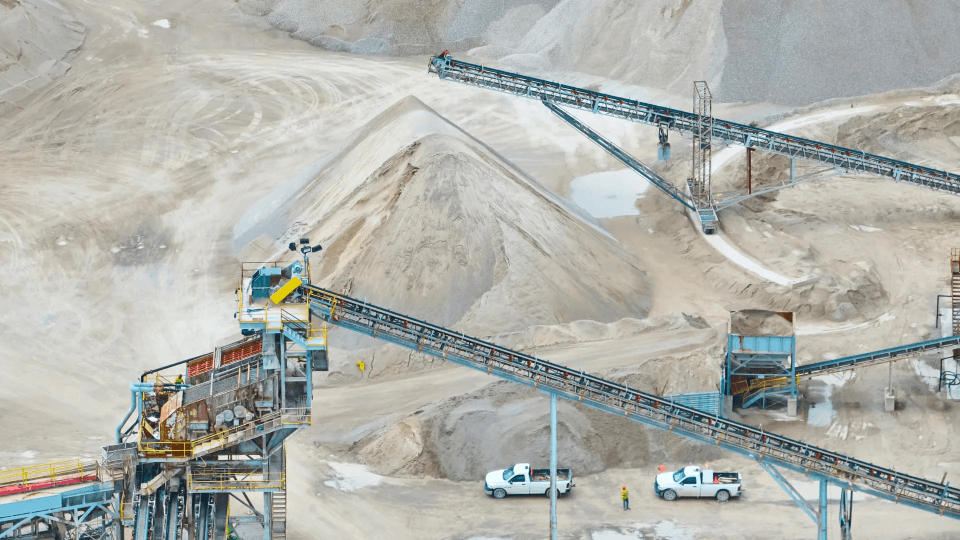
CATL, the largest battery manufacturer, announced the closure of the Jianxiawo mine, stating that it is renewing its expired permit without providing further details.
Lithium prices and related stocks spiked on Monday after battery giant Contemporary Amperex Technology (CATL) suspended operations at a major lithium mine in China, sparking speculation that the Chinese government might suspend other projects as it tackles excessive capacity in the economy.
Tianqi Lithium shares jumped up to 19% in Hong Kong, and Ganfeng Lithium Group surged 21% after CATL reported closing the mine. Similarly, Australian and US miners also saw gains. Meanwhile, the price of the battery metal on the Guangzhou Futures Exchange, which is the fifth futures exchange in mainland China, reached its daily limit and remained stable throughout the day.
In the US, Lithium Americas Corp. increased by as much as 13%, while Chilean company SQM saw a rise of up to 12%.
The CATL mine, China’s lithium hub, has been under scrutiny for several weeks amid speculation that officials might not extend its license. The mine was responsible for 6% of global output, according to the Bank of America.
CATL, the largest battery manufacturer, announced the closure of the Jianxiawo mine, stating that it is renewing its expired permit without providing further details.
Matty Zhao, co-head of China equity research at the bank, predicts that lithium prices will rise in the short run.
Lithium producers have been facing challenges due to global oversupply, which worsened after a decline in demand for electric cars, particularly after President Donald Trump’s rollback of incentives in America.
The Chinese company stated that stopping the operations will have minimal impact on its overall operations, leading to its shares rising as much as 2.8% in Hong Kong.
Eugene Hsiao, head of China equity strategy at Macquarie Capital, noted that CATL will not suffer significant disruptions to producing batteries after closing the mine. The broader concern is whether the lithium supply chain will see tighter capacity.
In recent months, the anti-involution narrative has captivated China’s financial markets, with investors trying to find industries and companies that may benefit from Beijing-led initiatives aimed at combating deflation and excessive capacity. The trend spans many sectors, including e-commerce, electric vehicles, and steel production. The anti-involution campaign aims to stop profit-eroding price wars and overcapacity.
Analysts from Citigroup suggested in a report that this might align with the government’s anti-involution initiative. They believe that closing Yichun would help China to reprice its strategic resources in the long term, ensuring that lithium is extracted and mined in a responsible and compliant manner.
Many Chinese battery companies, including CATL, have significantly increased their investment in minerals such as lithium, nickel, and cobalt to secure long-term supplies and reduce expenses. This strategy of vertical integration has enabled China to become the leading EV manufacturer worldwide. Vertical integration refers to a company taking control of multiple stages of its supply chain, either upstream (toward suppliers) or downstream (toward distributors or retailers).
The spot prices of lithium carbonate in China increased by 3%, reaching 75,500 yuan per ton. It is the highest level since February, as reported by Asian Metal Inc. The lithium carbonate prices on the Liyang Zhonglianjin E-Commerce platform, a popular benchmark for domestic investors, increased over 10,000 yuan to 85,500 yuan per ton for delivery in November.
Industry traders and executives are now closely watching other potential mining restrictions around China’s Yichun city, which has become a hub for battery metals. A local government department has requested that eight mining companies submit reports by the end of September, according to notes from brokers and analysts, after an audit that revealed non-compliance in their registration and approval processes.