
Standard Chartered has estimated that at least 50% of the investment pledges made to Egypt from Qatar and Kuwait, totalling $12.5 billion, could be disbursed by the end of this year.
Egypt’s economy has been performing well, driven by foreign investment and favourable policy reforms, which have helped it withstand the global economic upheavals, said Standard Chartered in its latest report. According to the bank’s Global Focus – Economic Outlook H2 2025 report, confidence in the Egyptian pound is growing due to increased foreign exchange inflows from portfolio investments and government support.
The MENA region, like the rest of the world, is grappling with much economic uncertainty as a result of heightened geopolitical tensions, low investor confidence, inflationary tendencies and the aftermath of the Trump tariffs. Amid these crises, Egypt’s economy has demonstrated considerable resilience, attracting investments and fostering strategic partnerships.
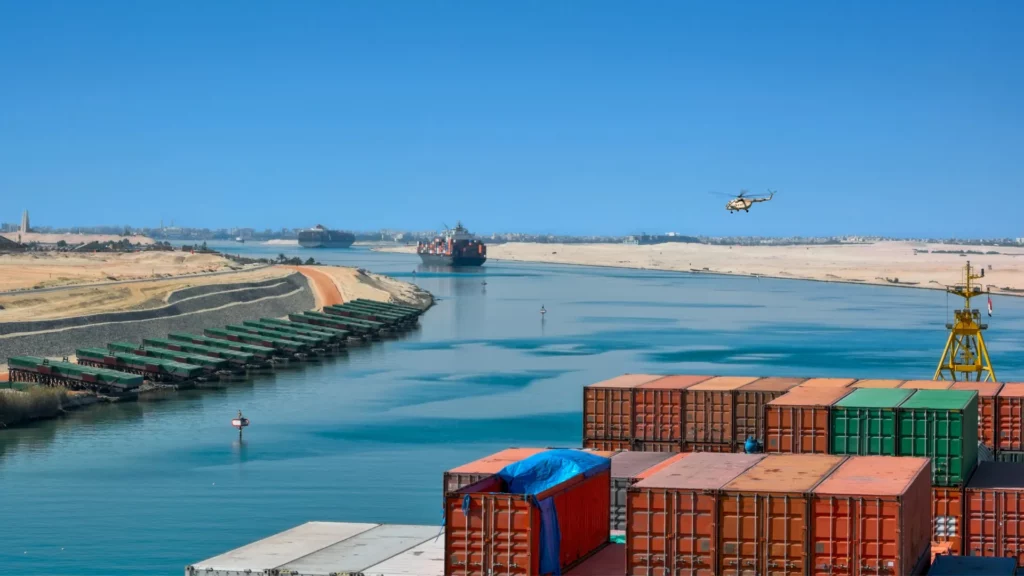
Standard Chartered has estimated that at least 50% of the investment pledges from Qatar and Kuwait, totalling $12.5 billion, could be disbursed by the end of this year. Egypt is centrally located, making it the regional trade centre, connecting the West and the East. Its massive infrastructural projects, like the Suez Canal Economic Zone, have made it an ideal place for potential investors to pour in their capital.
The country has been implementing policy reforms favourable to trade, business and investment. According to Mohammed Gad, CEO of Standard Chartered, Egypt, the current account deficit is expected to contract nearly 60% year on year in March, thanks to increasing remittances and the export sector, which is on an uptrend.
The successful testing of FX (foreign exchange market) convertibility further supports the carry trade’s continued appeal, notwithstanding the Central Bank of Egypt’s easing cycle, Standard Chartered said. Cairo’s economy could be further strengthened with the International Monetary Fund (IMF) expected to implement structural reform changes like more privatisation and more stringent fiscal policies.
The IMF had said in March, following the fourth review of the extended fund facility it has with Egypt, that the government had made commendable strides in implementing policies to enhance macroeconomic stability despite regional tensions, which negatively impacted Suez Canal revenues.
Standard Chartered’s GDP growth forecast for Egypt remained unchanged at 4.5% for 2026. The Bank also maintained that private investments were necessary for sustained economic growth. Inflation is the main sore spot, oscillating between 13% and 17%. Analysts believe the Central Bank will exercise prudence regarding rate cuts and have projected that the policy rate will hit 19.25% by the end of the year.
There is an 11% inflation forecast, mainly propelled by rising costs in the healthcare, food and transport sectors. However, the government is set to assuage these pressures through appropriate measures, which are expected to augment economic resilience.
The report stated that the global growth rate will be dampened due to the uncertainty surrounding the ongoing trade war, and therefore, Standard Chartered lowered the growth forecast from 3.2% to 3.1%. However, the bank maintained that several regions are showing signs of economic expansion. The Middle East is mainly set to benefit from the OPEC+’s decision to reduce cuts in oil production and the region’s efforts to diversify its economy and reduce its dependence on oil.
The Standard Chartered report also forecasts growth in Sub-Saharan Africa to be at 4.1% as the region is insulated from much trade volatility. Although the Bank has underscored that the countries in this region must implement structural reforms if they wish to maintain this growth momentum.
Despite Trump targeting Asian countries with high tariffs and threatening the manufacturing and export sectors, Asia’s growth is still projected at 4.9% followed by the Middle East, North Africa, Afghanistan, and Pakistan region at 3.4%. Uncharacteristically, the growth forecast for developed countries has been projected at 1.3%.
In the face of these significant economic challenges, these regional bright spots show robust but uneven global economic trends. Egypt’s proactive reforms and investment inflows have made it a surprising performer in an otherwise unstable global climate.