

Approximately 50,000 vehicles a year can be produced at the new plant, and Great Wall’s yearly target for Brazil is between 250,000 and 300,000 cars.
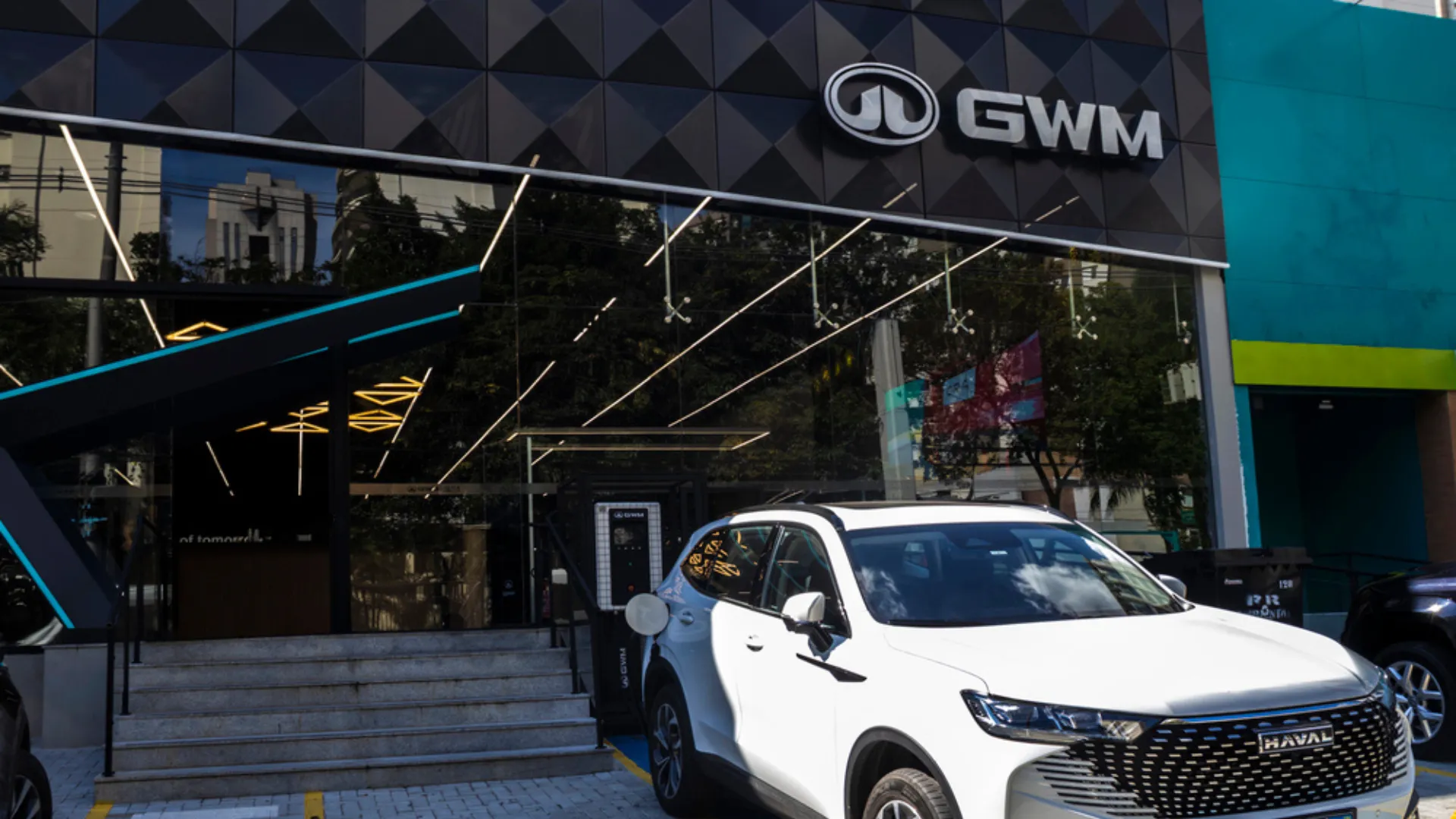
China’s Great Wall Motors (GWM) recently opened a plant in Brazil and is already scouting for another site to establish a second unit, as it plans to expand its presence across the country. Iracemápolis, the plant based in São Paulo, was opened on August 15, four years after the company bought the facility from Daimler, now known as the Mercedes-Benz Group.
The Haval H6 and H9 sport utility vehicles, as well as the Power P30 pickup truck, will be produced at this new unit. Approximately 50,000 vehicles a year can be produced at this plant, but Parker Shi, GWM International Chief Executive Officer, said that its yearly target for the country is between 250,000 and 300,000 cars, which includes both domestically manufactured and imported vehicles.
At the new factory opening last week, the Chinese company confirmed that it was already in talks with various Brazilian states, like Santa Catarina, Paraná, São Paulo, etc. Great Wall maintained that its new facility could be a consolidation of existing units to make a larger factory, or it could build a brand new factory altogether. The decision to build its second manufacturing unit will be finalised around mid-2026.
A new facility could serve as the hub for the production of a brand-new line of cars to close a gap in Great Wall’s lineup. The standard price for cars in Brazil is roughly 150,000 reais ($27,700), but GWM’s cars are priced upwards of 200,000 reais.
According to GWM Brazil Director of Institutional Affairs, Ricardo Bastos, competitive products priced below the 200,000 reais mark are necessary, like an SUV which is smaller than the H6, and a compact pickup truck. Bastos also added that this new lineup will not just be limited to a couple of models but will also be replicated in other countries where GWM has already set up shop.
South America’s largest economy has proved to be a lucrative site for expanding the automaker’s business. Great Wall has pledged 10 billion reais in investments across the country, and the Iracemápolis unit is part of that deal. GWM will invest 4 billion reais in 2026, and the remaining 6 billion reais will be delivered by 2032.
The second leg of the investments will be spread across supply chains, heavy vehicle business and battery pack assembly. Bastos believes that this particular project is essential to increase the local production capabilities of automobile components. This would allow GWM to meet the required quota to sell Brazilian-made cars to other South American countries like Argentina and Paraguay.
The inauguration of the Iracemápolis facility was a grand affair, with Brazil’s President Luiz Inácio Lula da Silva in attendance, along with company CEO Mu Feng, who was visiting the country for the first time. The company used this occasion to announce its plans to create its first-ever Research and Development Centre in South America.
This centre could employ over 60 technicians and engineers who would be working on local products like flex-fuel technology and relevant technology to adapt international vehicles to Brazil’s driving conditions.
The company is stretching its tentacles far and wide in Brazil and wishes to satisfy customer demands, maintain a single-price policy and incorporate customer-friendly policies and strategies. Great Wall’s sales forecast in Brazil for this year is 36,000 vehicles, which is a 23% climb from last year, and an increase of 5,000 vehicles, compared to the earlier forecast of 31,000 vehicle sales for 2025.
While the global auto industry appears to be in a slump, especially in the aftermath of the economic chaos caused by the Trump tariffs, GWM’s optimism suggests that its hunt for new markets and partnerships is bearing fruit.