
XtalPi’s net profit for the first half of the year, which was listed in Hong Kong in June 2024, reached 141.6 million yuan.
Shenzhen-based XtalPi saw a 615% increase in its revenue from its drug discovery business during the first half of the year, after a blockbuster deal that helped China become a significant contributor to global biotechnology innovation within the pharmaceutical industry.
XtalPi was founded in 2015 by three MIT-trained quantum physicists: Wen Shuhao, Ma Jian, and Lai Lipeng. It claims to have a unique combination of robotics and AI that can reduce the timelines of discovering drugs from four years to as little as one or two years.
Once a loss-making company, now that it applies AI to drug research, it is becoming the sweet spot for all investors in Hong Kong, drawn by its three founders, who studied at MIT and were backed by Tencent Holdings’ billionaire founder, Pony Ma Huateng.
Income from drug discovery increased to 435 million yuan (approximately US$61 million) in the first half of the year, after the company got its first US$51 million from a deal made in August with an American company, DoveTree, as stated in its earnings report released on Wednesday. The company was founded by Harvard chemist Gregory Verdine. It will get an additional US$49 million within the next six months, according to XtalPi’s announcement.
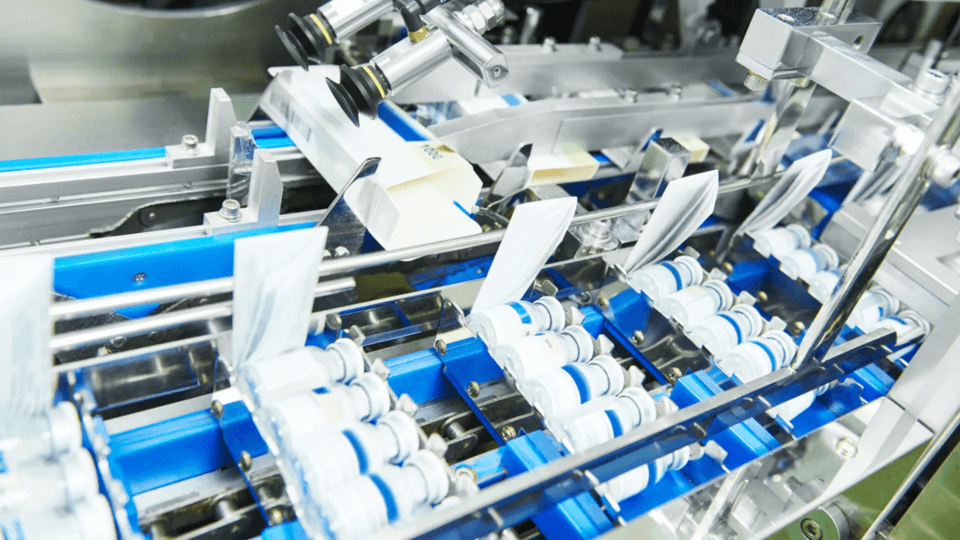
The company’s net profit for the first half of the year, which was listed in Hong Kong in June 2024, reached 141.6 million yuan, representing a turnaround from its previous year’s loss of 251.4 million yuan. Its overall income increased 404% to 517.1 million yuan, while income from Intelligent Robotics increased 96% to 81.9 million yuan, driven by growing demand for automated chemical synthesis services and research and development (R&D) solutions.
Before discussing the deal between XtalPi and DoveTree, it is worth noting that their US$6 billion deal will grant the latter exclusive global rights to develop and commercialize drug candidates that XtalPi identifies using its drug-discovery platform, powered by artificial intelligence (AI) and robotics. The deal covers small-molecule and antibody drugs, which are used to treat conditions such as cancer, immunologic diseases, and neurological disorders.
In the first half of 2025, US companies signed 14 licensing deals worth around US$18.3 billion with Chinese biotech companies, which is a significant increase from the two deals made in the same period a year before.
The Hong Kong Stock Exchange implemented Chapter 18C a year ago to allow promising startups valued at a minimum of HK$10 billion to sell shares even before getting any income, as part of the government’s strategy to make the city a technological hub.
Its IPO, conducted under the Hong Kong Stock Exchange’s Chapter 18C listing rules, which were aimed at high-growth technology startups, raised HK$989.3 million. The company’s stock reduced by 2.1% to HK$10.06 on Thursday.
There was a rapid expansion of China’s biotechnology industry, driven by supportive government policies and technological advancements. It has transformed the Hong Kong exchange into a major hub for biotech fundraising this year.
In May, Jiangsu Hengrui Pharmaceuticals raised the largest pharmaceutical initial public offering (IPO) in Hong Kong in five years, garnering US$1.26 billion. The company also revealed that it got a record-high net profit of 4.45 billion yuan in the first half of the year, up 29.67% compared to the previous year.
Innovent Biologics was the first Chinese company to receive approval for a weight loss and diabetes drug. It posted a 50.6% rise in first-half revenue to 5.95 billion yuan on Wednesday, and its net profit remained stable at 1.21 billion yuan.