

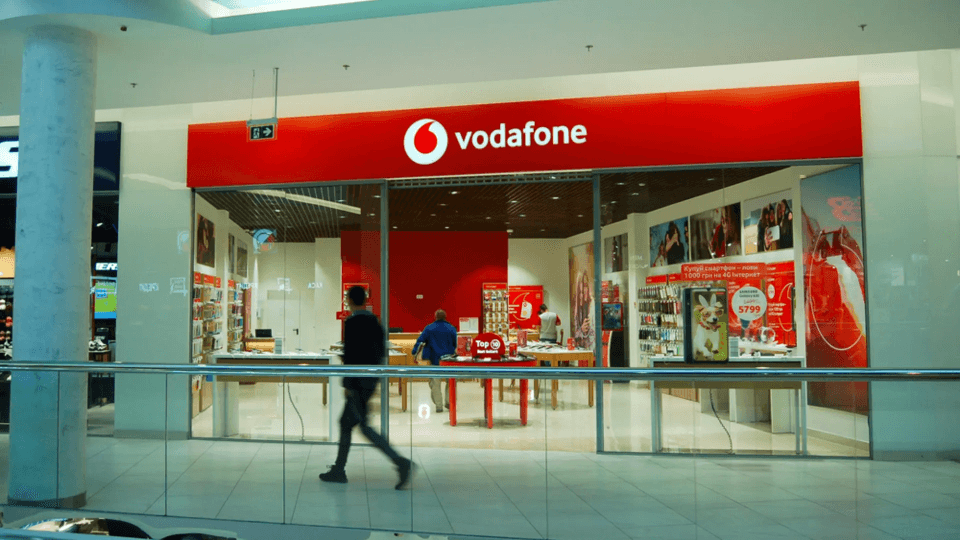
Vodafone’s share price has only increased slightly (1.2%) since its merger, indicating that investors remain cautious about the significant costs and challenges associated with merging two large companies.
Britain’s telecom landscape is going to have a major transformation as Vodafone is making a huge investment to roll out 5G across the country.
The recent £2 billion investment in a 5G network by VodafoneThree, a merged giant of Vodafone UK and Three UK, is set to be a game-changer for the UK telecom sector. It’s teaming up with Ericsson and Nokia to meet increasing demand for faster, more reliable connectivity.
It’s a bold move, forming part of an ambitious £11 billion infrastructure plan stretching over the next decade, and it signals how 5G spending can deliver real value growth for network operators and equipment makers.
The merger was approved by the UK’s Competition and Markets Authority (CMA) and officially completed in May 2025. With the deal done, VodafoneThree now stands as the UK’s largest mobile operator, having over 27 million customers and the financial power to execute an ambitious network upgrade.
The deal requires Ericsson to provide its radio access network (RAN) across 10,000 sites and upgrade the network’s core, while Nokia will supply RAN technology to 7,000 locations. For Ericsson and Nokia, the deal is a win-win for them as they get much-needed revenue in an industry with cutthroat competition and commoditized pricing.
The telecom equipment business has been under headwinds, with Chinese rivals such as Huawei and ZTE aggressively capturing market share. However, there’s a shift as Ericsson and Nokia regain ground. Nokia’s shares have climbed 11% in the past month after the company announced a 5G automation deal with AT&T and received approval from the EU for its acquisition of Infinera for $2.3 billion.
Numbers from Ericsson’s Mobility Report reveal that the higher the 5G subscriptions, the higher the revenue growth for telecom providers. The top 20 5G markets have seen an average annual growth rate of 3.5% over the last two years. For operators like VodafoneThree, investing in 5G means they will get higher-value services such as larger data buckets and ultra-low-latency applications, which will give them a revenue model that could offset the costs of their £11 billion investment over time.
However, there are still risks. Vodafone’s share price has only increased slightly (1.2%) since its merger, indicating that investors remain cautious about the significant costs and challenges associated with merging two large companies. Suppliers (such as Ericsson and Nokia) also face risks because they rely on a few very large contracts; any delays or extra costs could have a significant financial impact. On top of that, with ongoing uncertainty in the UK economy after Brexit, there are still questions about how much consumers will spend and how much investment will come in.
Despite these risks, the overall trend is positive. The demand for 5G is increasing thanks to things like artificial intelligence, video streaming, and more devices being connected to the internet. This makes investments in 5G seem less risky.
VodafoneThree’s focus on expanding rural 5G coverage, along with a £2 billion network investment with Ericsson and Nokia, means VodafoneThree can increase its share of the UK market. At the same time, Ericsson and Nokia benefit by having more stable and diverse sources of income.
In other news, Vodafone has signed a three-year agreement with Nokia to upgrade and expand its IP backhaul network in parts of India. This will modernize Vodafone Idea’s transport infrastructure, enabling it to better handle the growing demands of 4G and 5G data traffic. According to Nokia, these upgrades should also help bring down operating costs for Vodafone Idea.