

This also highlights the Ministry as a promoter of economic empowerment opportunities. Such agreements also help build domestic and international partnerships, which can contribute to advancing Libya’s goal of sustainable development.
Libya’s Ministry of Economy and Trade announced earlier this week that its Credit Guarantee Fund participated in the signing ceremony of the National Rehabilitation and Reintegration (militia) Project Agreement, which was part of the Islamic Development Bank Group’s (IsDB) Introductory Day. This resulted in the launching of the TAMEEN initiative.
Along with the Credit Guarantee Fund and the IsDB, this agreement also brought together five other important participants, namely, the Ministry of Finance, the National Rehabilitation and Reintegration Programme, the UNDP, the Libyan Islamic Bank, and Action for Humanity.
The Fund’s participation positions the Ministry of Economy as a strategic partner of development and financial initiatives. This also highlights the Ministry as a promoter of economic empowerment opportunities. Such agreements also help build domestic and international partnerships, which can contribute to advancing Libya’s goal of sustainable development.
The UNDP welcomed this initiative, stating that it would help women, youth, various communities, and persons with disabilities access financial support, while also assisting small businesses, thereby generating sustainable livelihood opportunities. It added that through this scheme, Libya’s economy could become more inclusive and resilient as it would contribute to human development.
The Economy Ministry’s Credit Guarantee Fund was set up during Gaddafi’s time and has had little success in augmenting the small and medium-sized enterprises (SME) and in providing training to women and youth, recent graduates in particular. Several efforts have been made to expand its reach, but post-February 17 administrations alike have also failed to garner adequate funds for banks to ensure they are properly equipped to provide the necessary financial catalyst needed by the SME sectors.
High demand for public sector jobs in Libya, coupled with the government’s overrecruiting of employees to these state-owned sectors, has resulted in the Fund’s failure.
Similarly, the National Project for Reintegration and Rehabilitation (of militias) has also met with little success since its launch in October 2021 by the Ministry of Labour and Rehabilitation. This project was part of multiple initiatives launched in the aftermath of the February 17 revolution and aims to disarm, demobilise, and reintegrate (DDR) Libya’s militias.
The DDR of the country’s militias was carried out under the watchful eyes of the Warriors Affairs Commission (WAC) in 2012. Two years later, in March 2014. The commission was restructured to create the Libyan Programme for Reintegration and Development (LPRD), which has since looked into the DDR program.
However, critics have pointed out that regardless of which body oversees the DDR, little progress has been achieved in conducting a nationwide reintegration of Libya’s militias. The country still struggles with the militia infiltrating the administrative ranks and exercising control and influence.
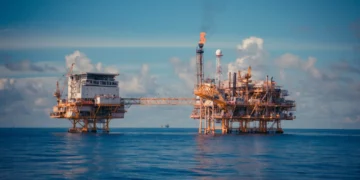
While there are many hurdles for the government to overcome, Libya’s policymakers are working to improve the country’s key sectors and services. Along with expanding the range of credit facilities, this week also saw the Minister of Oil and Gas headline the Just and Sustainable Energy Transition Conference.
The event was held to discuss improving responsible business practices and ensuring a transition within Libya’s energy sector. The oil and gas sector is facing critical issues, and according to the UNDP, this conference was organised in a timely fashion to address some of these challenges in the presence of domestic and international representatives, like the European Union delegation in Libya.
The Ministry of Oil described the conference as an opportunity to discuss sustainable development, renewable energy, and environmental protection, which the government has spotlighted as its strategic interests.
With these initiatives, it becomes apparent that the country is keen to implement sustainable and inclusive development initiatives. The world is moving towards a greener future, and Libya is not allowing its domestic political hurdles to derail its efforts to move forward with the rest of the world.