
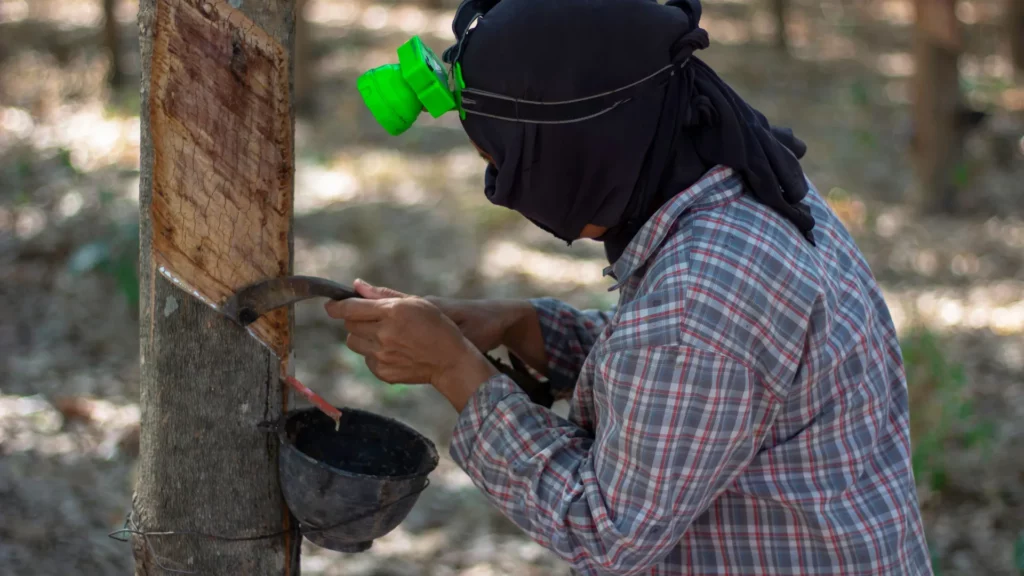
The removal of SVAT without a tried and tested refund mechanism will result in Sri Lanka’s rubber industry slipping into a major financial crisis, which will threaten small livelihoods, crumple small and medium enterprises (SMEs), reduce export competitiveness and shrink the island country’s foreign exchange inflows.
Sri Lanka’s decision to abolish the Simplified Value Added Tax (SVAT) from October 1 has been met with widespread opposition from the country’s export groups. Rubber traders across the country called for this move to be stopped, with the Colombo Rubber Traders’ Association (CRTA) issuing an urgent warning explaining the severe consequences this abolition would have on the industry.
Like other export chambers which have expressed a similar concern, the CRTA has also stated that the removal of SVAT without a tried and tested refund mechanism will result in Sri Lanka’s rubber industry slipping into a major financial crisis, which will threaten small livelihoods, crumple small and medium enterprises (SMEs), reduce export competitiveness and shrink the island country’s foreign exchange inflows.
The Daily FT reported that CRTA Chairman Harin de Silva said that, without an operational refund system, abolishing the SVAT will only disrupt the entire supply chain and urged the government to act before the damage from these actions becomes irreversible.
A major portion of the domestic rubber sector comprises smallholder farmers. If SVAT is no longer in place, manufacturers will be compelled to pay billions in VAT upfront, which will cause long delays in the purchase of raw rubber and also increase downward pressure on farm gate prices.
The SMEs within the rubber sector provide raw materials and intermediate processing, along with providing other essential services, and are at risk of disproportionate ruin. This is because, lacking major avenues for financing, these SMEs cannot bear the brunt of paying the VAT upfront, which will be a lump sum and therefore, the whole sector could crumble very quickly under this weight.
The Chairperson of the Sri Lanka Association of Manufacturers and Exporters of Rubber Products (SLAMERP) also said that this new plan will create a massive cash flow crisis within the sector, affecting smaller and large-scale exporters alike. SLAMERP believes that this would undo decades of progress which has come from strengthening local supply chains, increase unemployment rates, and fracture the backbone of Sri Lanka’s rubber industry.
Exporters are already bogged down by soaring operational costs, and volatile global demand must now contend with liquidity risks as the VAT refund timelines are subject to change. Without SVAT, these companies will now have to either borrow large amounts of capital or tie up the working capital, which further increases the existing pressure on thin margins.
The Inland Revenue Department (IRD) has promised the refund will be completed within 45 days, but exporters remain sceptical as no trial and error operation has been run to ensure these transactions can happen seamlessly. There are also systemic inefficiencies and a large coordination vacuum between IRD, Sri Lanka Customs and the exporting bodies, which have only raised the risk for SVAT removal.
SLAMERP has strongly urged the government to defer or phase out the abolition of SVAT until a more suitable and tested system replaces it. It has also called for Sri Lanka’s authorities to protect smallholder farmers and householders who are dependent on the rubber industry.
Exporter groups have also pushed for the government to take adequate action to protect SMEs and other industries from cash-flow shocks, as they are a threat to stable employment, established supply chains, and will decrease competitiveness in the market. Such moves are bound to affect the overall health of a country’s economy, and foreign inflows are bound to suffer.
In a country like Sri Lanka, the rubber industry is the lifeline of rural communities. It provides opportunities for SMEs, and as Colombo is a major global exporter, the sector is a key source of foreign exchange. Therefore, the removal of SVAT can only result in the country’s already fragile economic condition worsening, with serious ramifications.