

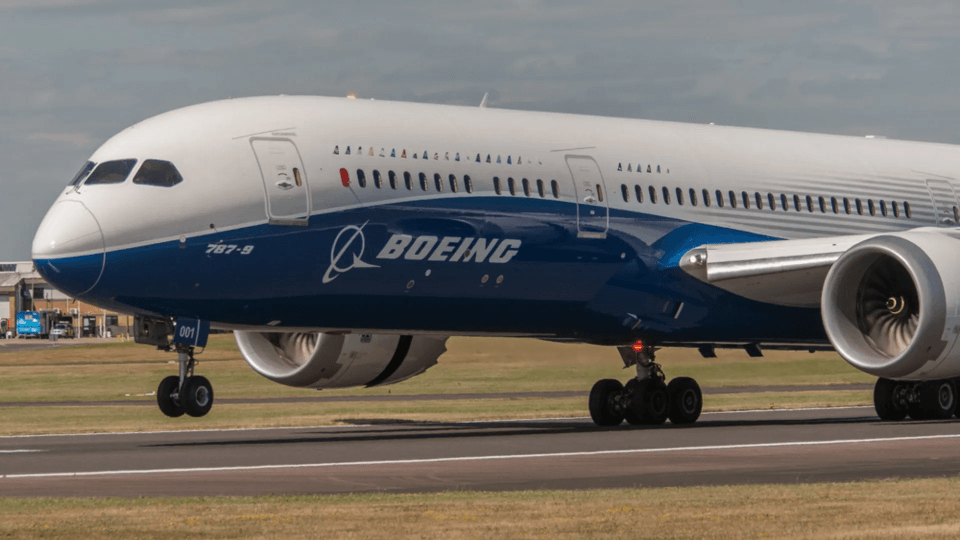
Boeing has proposed to EU regulators that it would sell Spirit’s loss-making operations in Europe to Airbus.
Boeing is set to gain EU antitrust approval for acquiring Spirit AeroSystems for $4.7 billion, according to sources familiar with the matter. The approval will come with conditions, such as the sale of some Spirit business to address EU regulatory concerns.
The deal was announced by Boeing last July. It was aimed to streamline operations and enforce quality control years after it spun off Spirit as an airline supplier.
Boeing has agreed to buy Spirit in all stock for a worth $4.7 billion. Meanwhile, Airbus will acquire Spirit’s unprofitable European-based operations, leading to a rare transatlantic split that will increase the shares for all three companies.
Previously, Boeing had separated Spirit’s Wichita and Oklahoma plants in 2005, but it now plans to reacquire them for roughly $37.25 per share, giving Spirit an enterprise value of $8.3 billion, including debt, according to reports.
Spirit CEO Pat Shanahan commented that merging Spirit with Boeing will integrate manufacturing and engineering, particularly in areas such as safety and quality.
The shares of Spirit increased 3.6% in US trading, while Boeing gained 2%.
Spirit noted the deal offered a 30% premium compared to the day before Boeing and Spirit announced the deal to bring the supplier in-house.
Boeing had long been contemplating buying back Spirit, as analysts observed that Spirit was struggling to operate independently, even after expanding with Airbus and others. They decided to go ahead as Boeing wanted to resolve a major company and industrial crisis that affected one of its key suppliers.
Boeing is working to recover from months of difficulties that started with the January blowout on Alaska Airlines’ 737 MAX 9, which exposed its quality issues. Those issues led to production slowdown at Boeing, affecting the global aviation industry.
Boeing was working to recover from its bad reputation for months. Fitch Ratings described the deal as “operationally beneficial” for Boeing, enabling the company to manage and plan production for the 737 MAX more effectively.
Amid the crisis, Boeing announced CEO Dave Calhoun was departing from the company, with industry executives and analysts suggesting that Spirit’s Shanahan, a former Boeing executive, could be the next replacement.
It was not immediately clear how long Shanahan will remain with Spirit, as the deal with Boeing is not expected to close until mid-2025.
Spirit has previously separated from Boeing. It was one of the cost-cutting moves that some critics say were focused on savings rather than quality. Boeing made the decision to buy back Spirit after the recent safety crisis, as part of its efforts to address safety issues and resolve production problems.
This raised questions about Spirit’s future that it carried with Boeing rival, Airbus, prompting the European company CEO to warn that it could veto any changes to Airbus-related plants if necessary.
On Monday, Airbus confirmed it would take over key operations at four Spirit plants in the US, Northern Ireland, France, and Morocco. This separate deal with Airbus came after the Boeing-Spirit negotiations.
Spirit’s nearly 20-year run as the world’s largest independent aerostructures maker ended as its main customers divided up its operations, following renewed doubts about the company’s resilience after the 737 MAX incident.
The remedies Boeing has proposed to satisfy EU competition regulators include selling Spirit’s loss-making operations in Europe to Airbus, and divesting its sites in Prestwick (Scotland), Subang (Malaysia), and non-Airbus-supporting operations in Belfast. The European Commission is set to make a final decision by October 14.
Both Boeing and Spirit AeroSystems declined to comment. The UK’s competition authority approved the deal without conditions in August.