
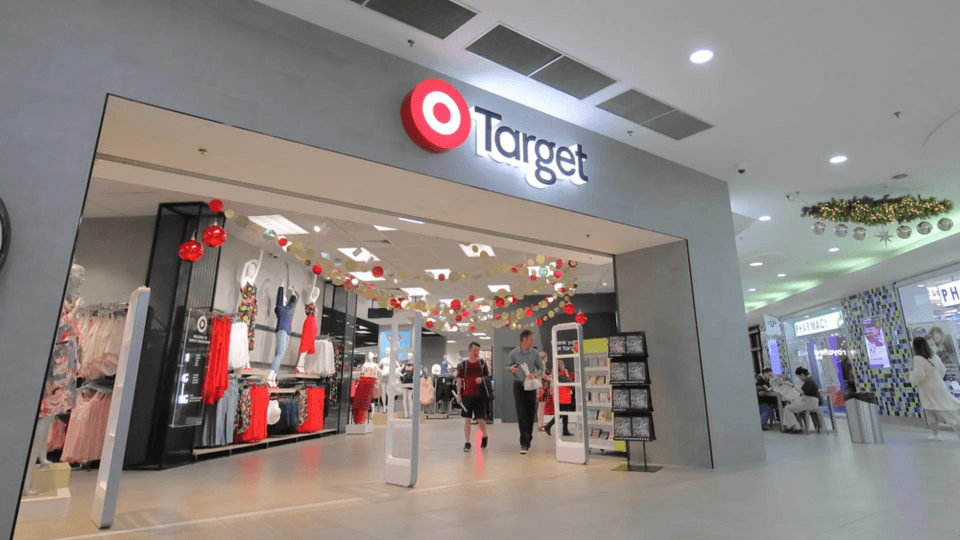
Target is introducing digital tools to help staff complete tasks like unlocking and stocking quickly, freeing team members to help customers
Target, one of the world’s leading retail stores, announced a bigger-than-expected decline in its sales. It comes as the company is in the middle of a challenging retail terrain, with consumers cautiously spending due to ongoing economic uncertainty.
The Minneapolis-based retailer is responding to these challenges by cutting prices and investing heavily in its stores to win back cash-strapped US shoppers during the holiday season.
The retailer’s shares were down after the earnings report and have been in a downward trend, which has made the company’s stock lose about 35% of its value this year.
The results come after the first quarter, when Target appointed Michael Fiddelke, a longtime executive, as its CEO to bring the business back to health. The company, which has been facing declining comparable sales over the past three quarters, is planning to invest about $1 billion more in 2026 in new stores, store remodels, and improvements to its digital business.
These measures were made to improve the shopping experience for consumers and position Target in an increasingly digital retail environment.
Fiddelke stated that the company is experimenting with a new operational model across 35 markets that refines how Target fulfills online orders. Under this approach, only selected locations will handle pickup and packing these orders, while other stores focus on in-store. The goal was to streamline operations and make the most efficient use of each store.
In stores, Target is introducing digital tools to help staff complete tasks like unlocking and stocking quickly, freeing team members to help customers. Online, the company is introducing an artificial intelligence-powered gift finder to help customers during the holiday season.
The company is also using machine learning to forecast inventory needs, making its most popular 5000 items more consistently available to customers.
The company made these efforts after reducing 1800 roles, which was part of Fiddelke’s plan to reduce costs and help the company come out of the slump in sales.
D.A. Davidson analyst Michael Baker stated that it is too soon to see meaningful changes in the new CEO Michael Fiddelke’s strategies, but decisive actions are underway.
Target’s results were also influenced by the longest government shutdown in US history, which delayed federal pay and foot-stamp benefits and unsettled consumers. Additionally, inflation and tariff worries were reasons many shoppers tightened their belts.
These factors reduced comparable sales for both in-store and online channels by 2.7% for at least 13 months, a decline from analysts’ expectations.
These factors also affected other companies such as Home Depot and Lowe’s, which have lowered their annual expectations due to the muted housing market. Discount retailer TJX has increased its annual profit due to strong demand for low-priced branded goods.
Walmart, an affordable grocery and essentials store, is expected to benefit from consumer pullback. It has invested in technology to deliver its items to customers quickly. It has hekoed to gain market share from competitors like Target, according to UBS analyst Michael Lasser.
Target might be having a challenging third quarter, but it expects a better fourth quarter, which includes all the major holidays, so customers will be willing to spend more.
The company expects low single-digit sales declines and has adjusted its annual earnings in a range of $7 to $8 per share. Analysts stated that the reason for the wide range of potential profits was due to ongoing volatility in trading conditions and the impact of recent price cuts.
Target has reduced prices on 3,000 everyday products, including groceries and household staples, to attract budget-conscious shoppers. The company has also introduced an affordable Thanksgiving meal kit. Target has earned revenue per share above analysts’ expectations, even though total income for the quarter declined 1.6% to $25.27 billion.
The retailer is focusing on operational efficiency, digital innovation, and value pricing to navigate the critical retail environment and shape its path forward.