

• About us
  • Advertise
  • Contact
  • Nominate
  • Client’s Voice
  • Login
  • Register
📖 Magazine
The Global Economics
  • Home
  • Banking
  • Non Banking
  • Markets
  • Infrastructure
  • Lifestyle
  • FeatureNew
  • Awards
No Result
View All Result
  • Home
  • Banking
  • Non Banking
  • Markets
  • Infrastructure
  • Lifestyle
  • FeatureNew
  • Awards
No Result
View All Result
The Global Economics
No Result
View All Result
Home Lifestyle Technology

Japan Builds an Advanced 1.4nm Chip to Challenge TSMC and Reclaim Semiconductor Leadership

The Global Economics by The Global Economics
November 26, 2025
in Technology, Infrastructure
Reading Time: 3 mins read
0
Japan Builds an Advanced 1.4nm Chip to Challenge TSMC and Reclaim Semiconductor Leadership

Japan Builds an Advanced 1.4nm Chip to Challenge TSMC and Reclaim Semiconductor Leadership

30
SHARES
169
VIEWS
FacebookTwitterRedditWhatsAppLinkedInFacebook

Japan has been committed to reviving its semiconductor industry from decades of decline  through investment from global leaders.

Japan, which was once a leader in semiconductors, has found itself falling behind in the race with regional competitors such as Taiwan, South Korea, and China. Now, to regain its footing in the industry, it is trying to turn its most prized agricultural regions into hubs for advanced semiconductor manufacturing.

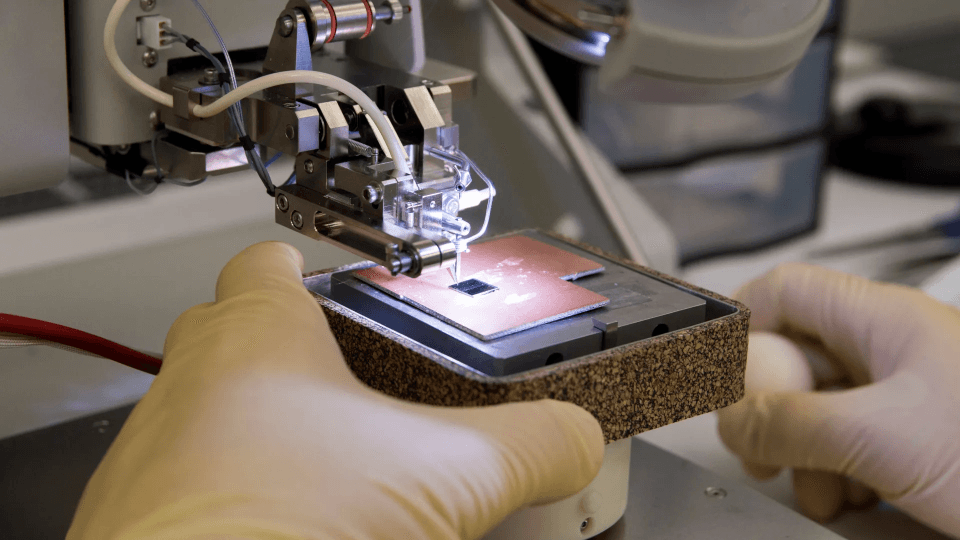
At the core of this effort, Rapidus, a Japanese chipmaker, plans to build a second factory to manufacture advanced semiconductors and join the race with Taiwan Semiconductor Manufacturing Co. (TSMC).

Rapidus is supported by both the government and major Japanese corporations, including Toyota, Sony, and SoftBank. It was formed in partnership with IBM and has raised billions of dollars to help Japan reclaim its status in the semiconductor industry. It wanted to build Japan’s first state-of-the-art chip foundry, which required a massive investment of public and private resources.

Tokyo is investing $12 billion in the ambitious project to build an advanced semiconductor fabrication facility in the city of Chitose. Rapidus CEO Atsuyoshi Koike stated that Chitose was selected for its water and electricity supplies, its lower earthquake risk, and its natural environment. In fact, the factory was designed to reduce environmental impact by blending with the landscape, such as its grass-covered exterior.

A major milestone was the delivery of an extreme ultraviolet lithography (EUV) system from ASML, a crucial equipment for Rapidus to produce two-nanometre (2nm) transistors. This chip was on par with the technological advancements of only Taiwan Semiconductor Manufacturing Company and Samsung.

Intel opted to bypass 2nm technology and move directly from 7nm to 1.8nm chips. Koike stated that Rapidus developed a 2nm prototype for the first time in the Japanese tech industry, achieving unprecedented speed, credited to IBM collaboration.

Rapidus plans to start mass production of 2nm chips by 2027. However, the biggest challenge would be high yield and consistent quality, areas where Taiwan and South Korea currently retain a lead. TSMC, for example, has already mastered large-scale production of advanced chips, despite the technical and financial demands.

Despite this development, there were concerns about Japan’s ability to achieve its semiconductor ambitions. A 2024 report by the Asean+3 Macroeconomic Research Office stated that government subsidies and consortium contributions fall short of the estimated 5 trillion yen needed to start mass production.

The Center for Security and International Studies (CSIS) expressed doubt about Rapidus’s ability to gain sufficient experience to manufacture advanced chips and questioned whether it will be as competitive as established players like TSMC and Samsung.

Another problem the company faces is building a customer base, as suppliers such as TSMC and Samsung already have established relationships with their buyers.

Recently, Japan has been committed to reviving its semiconductor industry from decades of decline  through investment from global leaders. Japan was once producing almost 50% of the world’s semiconductors 4 decades ago, but it has declined to just 10%. Analysts stated that the US-Japan trade tension in 1980 could be the turning point.

TSMC is manufacturing 12- and 28-nm chips in Kumamoto. Through that, it encourages local economic growth and strengthens the supplier network. The company is also building a second factory, which is expected to open by the end of 2027.

Japanese companies are gradually expanding with the help of the government. Kioxia and Toshiba have expanded their factories in various regions. Micron, an American memory chip producer, will get substantial subsidies to grow its Hiroshima operations. Samsung is building a research and development center in Yokohama, and both ASML and Tokyo Electron have established offices in Chitose.

Japan is determined to reclaim its role in the semiconductor industry, but it faces obstacles, such as financial constraints, talent shortages, and global competition. Yet with strategic investments and international collaboration, the country is working to overcome these barriers and re-establish itself as a force in advanced semiconductor manufacturing.


Tags: IBMjapansamsungsemiconductor chipsSoftBank GroupTSMC
The Global Economics

The Global Economics

Related Posts

Australian National Storage Set For $3.4 Billion Take Over By Brookfield And GIC
Mergers & Acquisitions

Australian National Storage Set For $3.4 Billion Take Over By Brookfield And GIC 

by The Global Economics
December 8, 2025
Rebound in exports pushes China’s trade Surplus past the $1 Trillion Mark
Global Trade

Rebound in exports pushes China’s trade Surplus past the $1 Trillion Mark

by The Global Economics
December 8, 2025
Moore Threads Delivers Nvidia-Style Rally, Jumps 502% Post $1.5 Billion IPO Launch
Markets

Moore Threads Delivers Nvidia-Style Rally, Jumps 502% Post $1.5 Billion IPO Launch

by The Global Economics
December 5, 2025
UK Engineering Giant Wood Group Gains $450 Million Boost from Sidara
Mergers & Acquisitions

UK Engineering Giant Wood Group Gains $450 Million Boost from Sidara

by The Global Economics
December 5, 2025
Report Reveals $74.6 Billion poured into Saudi Arabia's Transport and Logistics Sector
Saudi Arabia

Report Reveals $74.6 Billion poured into Saudi Arabia’s Transport and Logistics Sector

by The Global Economics
December 4, 2025
Twitter Youtube LinkedIn Soundcloud
the global economics logo

The Global Economics Limited is a UK based financial publication and a Bi-Monthly business magazine giving thoughtful insights into the financial sectors on various industries across the world. Our highlight is the prestigious country specific Annual Global Economics awards program where the best performers in various financial sectors are identified worldwide and honoured.

DMCA.com Protection Status

  • Privacy
  • Legal
  • Terms of Use
  • Client’s Voice
  • Server Status

norton verified - the global economics

Latest Posts

Australian National Storage Set For $3.4 Billion Take Over By Brookfield And GIC

Australian National Storage Set For $3.4 Billion Take Over By Brookfield And GIC 

December 8, 2025
Rebound in exports pushes China’s trade Surplus past the $1 Trillion Mark

Rebound in exports pushes China’s trade Surplus past the $1 Trillion Mark

December 8, 2025
Moore Threads Delivers Nvidia-Style Rally, Jumps 502% Post $1.5 Billion IPO Launch

Moore Threads Delivers Nvidia-Style Rally, Jumps 502% Post $1.5 Billion IPO Launch

December 5, 2025
Download The Global Economics PWA to your mobile or Desktop
PWA App Download
Download The Global Economics Android App to your mobile or Desktop
Android App
Download The Global Economics IOS App to your mobile or Desktop
IOS App

All Rights Reserved © 2020 | 🇬🇧 The Global Economics, Business Finance Publication - www.theglobaleconomics.uk 🌏

Welcome Back!

Sign In with Facebook
Sign In with Linked In
OR

Login to your account below

Forgotten Password? Sign Up

Create New Account!

Sign Up with Facebook
Sign Up with Linked In
OR

Fill the forms below to register

*By registering into our website, you agree to the Terms & Conditions and Privacy Policy.
All fields are required. Log In

Retrieve your password

Please enter your username or email address to reset your password.

Log In
No Result
View All Result
  • About us
  • Awards
  • Magazine
  • Client’s Voice
  • Exclusive Coverage
  • Nominate
  • Login
  • Sign Up

All Rights Reserved © 2020 | 🇬🇧 The Global Economics, Business Finance Publication - www.theglobaleconomics.uk 🌏

This website uses cookies. By continuing to use this website you are giving consent to cookies being used. Visit our Privacy and Cookie Policy.
Go to mobile version