
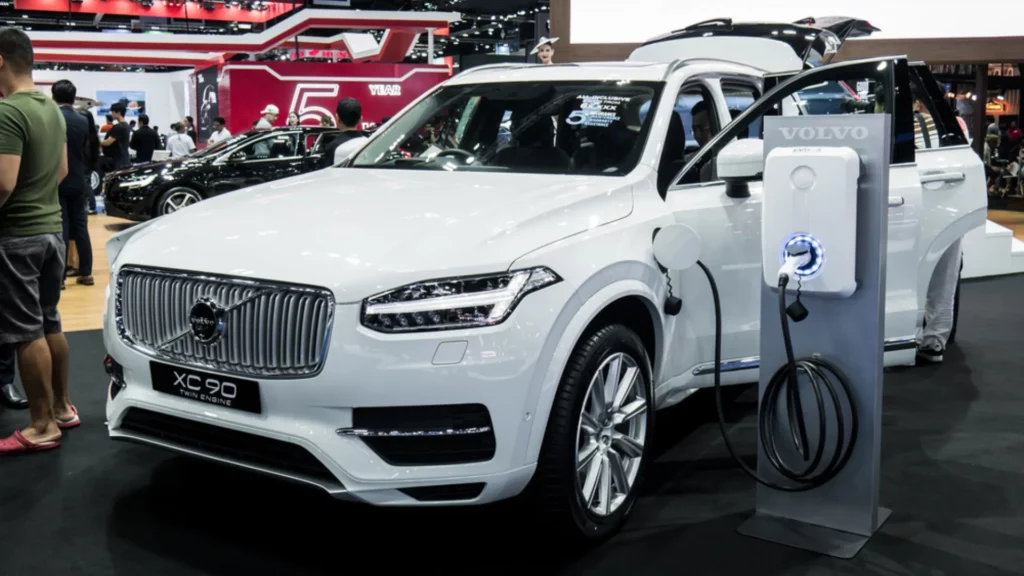
Volvo’s leadership has echoed that concern, saying a delay would not only underline the EU’s climate goals but could also weaken the continent’s industrial transition.
Swedish automakers Volvo and Polestar have publicly urged EU policymakers not to backtrack on the bloc’s 2035 ban on the sale of new petrol and diesel cars, as mounting pressure from Germany and parts of the industry threatens to reopen the debate. The plea comes at a delicate moment for Brussels, which is weighing industrial competitiveness against its climate commitments.
In recent remarks, Polestar’s chief executive warned that any softening of the 2035 deadline would be tantamount to surrendering the strategic initiative to Chinese manufacturers-a sector that, he argued, is racing ahead on electric-vehicle (EV) scale, cost and supply-chain integration. Volvo’s leadership has echoed that concern, saying a delay would not only underline Europe’s climate goals but could also weaken the continent’s industrial transition.
The call from the two Swedish marques amplifies a broader split in Europe. Germany’s chancellor has signaled he will press the European Commission to allow more technological flexibility-notably exemptions for hybrids, “range extenders” and what Berlin calls highly efficient combustion engines-arguing such measures are necessary to protect jobs and the competitiveness of German Carmakers. That intervention has given fresh momentum to industry appeals for a rethink.
For supporters of the 2035 ban, including a coalition of EV investors and clean-technology firms, the risk of altering the timetable is clear: it would inject long-term policy uncertainty and could chill the sustained investment needed to scale battery production, charging infrastructure and the supporting industrial ecosystem. Campaign groups and many corporate backers say the rule provides a predictable signal that has already mobilized capital and supply-chain shifts across Europe.
The technical and political friction is real. Automakers aligned with Germany’s position point to shaky EV sales in parts of Europe, high energy and input costs and fierce price competition from China as reasons for caution. They argue that allowing clean-fuel alternatives or a longer transition could give manufacturers breathing and space to electrify at a less disruptive pace. Opponents counter that incrementalism risks locking in emissions and ceding manufacturing leadership to countries that are doubling down on EVs today.
Brussels now faces a policy test: preserve a clear, legally binding pathway to zero-emission new cars or accommodate national industrial concerns that fear a rapid switch. The European commission has been urged to review parts of the auto legislation in coming days, and any signs of roll-back would likely provoke swift response from environmental NGOs and firms that have baked on the existing timetable.
For Volvo and Polestar, the decision is strategic as much as moral. Both companies, which have staked their futures on electrifications, are effectively saying that the short-term pain of a firm deadline will pay longer-term dividends in terms of scale, innovation and market resilience. Their message is also a geopolitical one: Europe must not relax now, they say, when rivals abroad-particularly in Asia-are intensifying their electric push.
Whichever way the commission leans, the outcome will reverberate through Europe’s car industry and beyond. If Brussels holds firm, manufacturers who have lagged will face a harder pivot; if it loosens the rules, the EU risks fragmenting a policy that many investors view as essential to Europe’s green and industrial ambitions. Either path involves trade-offs between climate leadership and short-term industrial stability-a tension that will define Europe’s automotive future for years to come.
In the end, the debate over the 2035 petrol-car ban is becoming a defining moment for Europe’s industrial identity. Whether the EU stays firm or bends to pressure, the decision will shape not just emissions targets but the region’s long-term competitiveness. For Volvo and Polestar, the path is clear: certainty breeds innovation and hesitation only widens the gap with global rivals.