
• About us
  • Advertise
  • Contact
  • Nominate
  • Client’s Voice
  • Login
  • Register
📖 Magazine
The Global Economics
  • Home
  • Banking
  • Non Banking
  • Markets
  • Infrastructure
  • Lifestyle
  • FeatureNew
  • Awards
No Result
View All Result
  • Home
  • Banking
  • Non Banking
  • Markets
  • Infrastructure
  • Lifestyle
  • FeatureNew
  • Awards
No Result
View All Result
The Global Economics
No Result
View All Result
Home Feature Economy

South Korea Sees Softer Treatment From US Tariffs on Semiconductors, Pharma

prajwal by prajwal
August 6, 2025
in Economy, Trending, USA
Reading Time: 3 mins read
0
South Korea Sees Softer Treatment From US Tariffs on Semiconductors, Pharma

South Korea Sees Softer Treatment From US Tariffs on Semiconductors, Pharma

39
SHARES
216
VIEWS
FacebookTwitterRedditWhatsAppLinkedInFacebook

Finance Minister Koo Yun-cheol mentioned that South Korea was the most favoured country in the recent agreement.


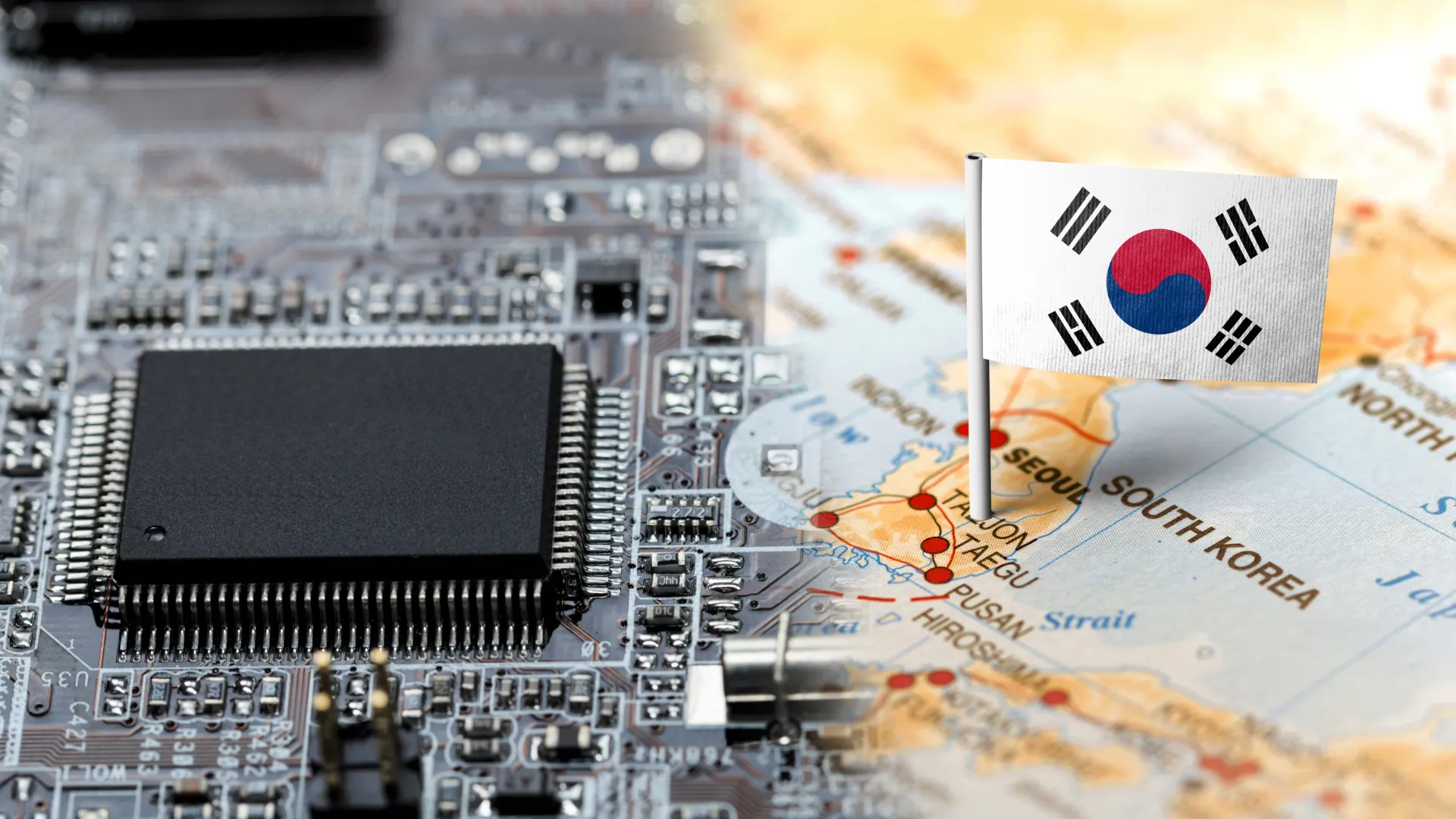
South Korea’s finance minister announced that the country has secured a commitment from the United States (US), ensuring that it would not face harsher treatment if Washington proceeds with new tariffs on semiconductors and pharmaceuticals. 


President Donald Trump announced that the US will impose a 15% tariff on imports from South Korea, down from the previously threatened 25%. This announcement was part of a deal to ease tensions with a top-10 trading partner and a significant Asian ally.


Under the new deal, South Korea has committed to invest $350 billion in US projects selected by Trump and will buy $100 billion in American energy.
Although South Korea was one of the three Asia-Pacific countries with a comprehensive free trade agreement with the US, it did not spare them from new tariffs being imposed. 


The deal was announced by President Donald Trump and confirmed by Seoul officials. It brings one of the world’s largest exporters into America’s evolving trade framework and shields a major supplier of cars, smartphones, and machinery from the highest tariffs just a day before the deadline. However, the won fell against the dollar after an initial rise, and the Seoul stock market lost its early momentum. 


Finance Minister Koo Yun-cheol stated that the US has made a promise to provide softer treatment to sectors such as pharmaceuticals and semiconductors. He added that, although they are not completely satisfied, they are happy that they are not at a disadvantage compared to other countries. 


Koo mentioned that South Korea was the most favoured country in the recent agreement, compared to countries like Japan and the European Union. President Donald Trump announced that he will soon impose tariffs on semiconductors and pharmaceuticals. It is essential news for South Korea, as it accounts for 20% of the country’s exports.  


South Korea has signed a trade agreement with the US, which includes 15% tariffs on most Korean products and requires an investment of $350 billion. But many details are still unclear.


President Lee Jae Myung aims to hold a summit with Trump soon to build on the initial agreement and resolve outstanding issues. Although South Korea has sidestepped severe consequences, Koo stressed that the government will start alert and prepare for the next round of conversations. He indicated that the government will work closely with companies and relevant ministries to ensure that their investment commitments lead to business opportunities, especially in shipbuilding and other key industries. 


Japan has received assurances from Washington, with Trump guaranteeing that Tokyo will not receive less favorable treatment than other countries concerning sectoral tariffs, including those targeting chips and pharmaceuticals.


This also means that Japan will ensure the lowest global tariff rate applicable to those tariffs. While the US has been hesitant to grant a broader exemption, the UK trade agreement gave some relief on steel tariffs. 


Following the last-minute trade agreement with the US, South Korean President Lee Jae Myung has gained popularity among the residents. The tariff negotiations were one of the first high-stakes diplomatic tests for Lee, who is still in his honeymoon phase with the electorate. His electoral success in June ended a turbulent time, which included the removal of his predecessor, Yoon Suk Yeol, after a failed attempt to impose martial law. 


Nevertheless, Lee still faces challenges as details of the deal, including a $350 billion South Korean fund for US investments, are finalised. The Asian leader may also face pressure from President Donald Trump to increase defence spending and pay more to host American troops in South Korea as they prepare for the summit. 
Tags: Donald Trumppharmaceuticalssemiconductorssouth koreaus
prajwal

prajwal

Related Posts

Trillion-Dollar Cities: How Gulf Mega-Projects Are Redefining Urban Economics
Economy

Trillion-Dollar Cities: How Gulf Mega-Projects Are Redefining Urban Economics

by The Global Economics
March 10, 2026
Top 10 Non-Oil Revenue Streams driving GCC Economic Diversification in 2026
Economy

Top 10 Non-Oil Revenue Streams driving GCC Economic Diversification in 2026

by The Global Economics
March 10, 2026
Latin America’s Commodity Supercycle Debate In 2026: Reality Or Optimism?
Economy

Latin America’s Commodity Supercycle Debate In 2026: Reality Or Optimism?

by The Global Economics
March 7, 2026
Europe’s Strategic Autonomy in 2026: Can the Region Finance a Post-Globalisation Era?
defence

Europe’s Strategic Autonomy in 2026: Can the Region Finance a Post-Globalisation Era?

by The Global Economics
March 6, 2026
Asia’s Middle-Class Surge in 2026: The Rise of Domestic Demand as the Region’s Growth Anchor
Economy

Asia’s Middle-Class Surge in 2026: The Rise of Domestic Demand as the Region’s Growth Anchor

by The Global Economics
March 4, 2026
Twitter Youtube LinkedIn Soundcloud
the global economics logo

The Global Economics Limited is a UK based financial publication and a Bi-Monthly business magazine giving thoughtful insights into the financial sectors on various industries across the world. Our highlight is the prestigious country specific Annual Global Economics awards program where the best performers in various financial sectors are identified worldwide and honoured.

DMCA.com Protection Status

  • Privacy
  • Legal
  • Terms of Use
  • Client’s Voice
  • Server Status

norton verified - the global economics

Latest Posts

Why US Companies Are Stockpiling Cash in 2026: Preparing for the Next Global Slowdown?

Why US Companies Are Stockpiling Cash in 2026: Preparing for the Next Global Slowdown?

March 9, 2026
Latin America’s Commodity Supercycle Debate In 2026: Reality Or Optimism?

Latin America’s Commodity Supercycle Debate In 2026: Reality Or Optimism?

March 7, 2026
Europe’s Strategic Autonomy in 2026: Can the Region Finance a Post-Globalisation Era?

Europe’s Strategic Autonomy in 2026: Can the Region Finance a Post-Globalisation Era?

March 6, 2026
Download The Global Economics PWA to your mobile or Desktop
PWA App Download
Download The Global Economics Android App to your mobile or Desktop
Android App
Download The Global Economics IOS App to your mobile or Desktop
IOS App

All Rights Reserved © 2020 | 🇬🇧 The Global Economics, Business Finance Publication - www.theglobaleconomics.uk 🌏

Welcome Back!

Sign In with Facebook
Sign In with Linked In
OR

Login to your account below

Forgotten Password? Sign Up

Create New Account!

Sign Up with Facebook
Sign Up with Linked In
OR

Fill the forms below to register

*By registering into our website, you agree to the Terms & Conditions and Privacy Policy.
All fields are required. Log In

Retrieve your password

Please enter your username or email address to reset your password.

Log In
No Result
View All Result
  • About us
  • Awards
  • Magazine
  • Client’s Voice
  • Exclusive Coverage
  • Nominate
  • Login
  • Sign Up

All Rights Reserved © 2020 | 🇬🇧 The Global Economics, Business Finance Publication - www.theglobaleconomics.uk 🌏

This website uses cookies. By continuing to use this website you are giving consent to cookies being used. Visit our Privacy and Cookie Policy.
Go to mobile version