
The Gucci-parent company has agreed to sell its fragrance line, Creed, to L’Oreal. Kering has also given the French beauty giant a 50-year exclusive license to develop fragrance and beauty products under its fashion labels like Gucci, Bottega Veneta and Balenciaga.
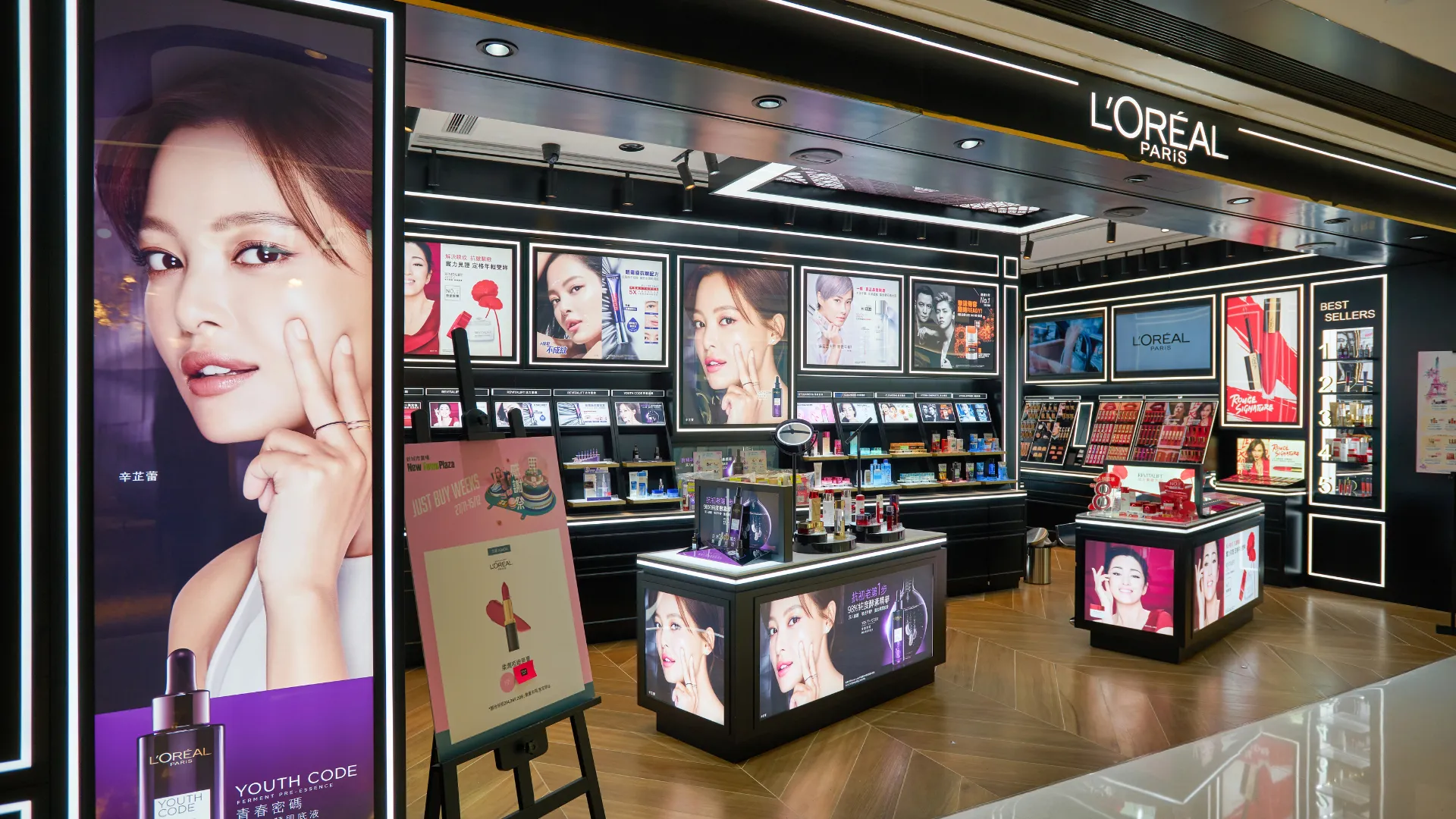
Luxury group Kering announced its decision to sell its beauty business subsidiary to French company L’Oreal for 4 billion euros ($4.66 billion). This move is part of new CEO Luca de Meo’s strategy to manage Kering’s high debt and refocus its core business on fashion.
The Gucci-parent company has agreed to sell its fragrance line, Creed, to L’Oreal. Kering has also given the French beauty giant a 50-year exclusive license to develop fragrance and beauty products under its fashion labels like Gucci, Bottega Veneta and Balenciaga. However, it is worth noting that the license to build fragrance lines for Gucci is currently held by Coty, and L’Oreal is believed to acquire these rights once the current license expires in 2028.
Kering had a net debt of 9.5 billion euros at the end of June, along with 6 billion euros in long-term lease liabilities, which only furthered investor concerns, and this new deal is the company’s way of assuring investors that it has a long-term plan to get its finances in order. With demand falling for Gucci products in China, which has served as one of the primary markets for the brand, Kering has struggled with declining growth.
Gucci comprises most of Kering’s profits, and so, in an attempt to reduce its dependence on the luxury fashion brand, Kering acquired perfume maker Creed for 3.5 billion euros in 2023 and established its beauty business. Despite its efforts to diversify its product range, the company has failed to boost its revenue, even recording a 60 million euro operating loss in the first six months of the year.
In July, Kering reported a 15% drop in quarterly revenues, with sales totalling 3.7 billion euros. Gucci also reported 1.46 billion euros in profits, a 25% fall, year on year. The French billionaire Pinault family-controlled group brought down its net down in June from 10.5 billion at the end of last year, mainly from its real estate business.
In the last year alone, Kering has lost over 60% of its share value. The company has also decided to shrink its store network, with plans to shut down operations in roughly 80 stores by the end of this year.
In September, Meo said that he intends to make certain difficult decisions to get the company back on track. He had also hinted that changes which would make Kering more profitable, faster and more integrated would be implemented by the end of 2025. With news of the L’Oreal buyout, investors and industry observers are anticipating Meo’s next moves.
This is not the first time Kering and L’Oreal have entered into a partnership. In 2008, L’Oreal, which is the leading cosmetics and beauty company in the world, acquired the rights to produce perfumes under the Yves Saint Laurent brand from Kering for 1.15 billion euros. This will be L’Oreal’s biggest deal to date, surpassing its buyout of Australia’s Aesop for $2.5 billion in 2023.
The cosmetics-maker had announced earlier this year that it had many M&As in the pipeline. Earlier this month, representatives of Armani also approached L’Oreal to be one of the potential buyers of a minority stake in the company, after the French brand was named as one of the preferred buyers in a will by late designer Giorgio Armani himself.
With the luxury sector in a slump owing to lowered consumption expenditure in China and uncertainty surrounding Trump tariffs, any restructuring that occurs within companies, across the industry, is unlikely to yield immediate results. These are long-term prospects which will only bear fruit a couple of years from now, once global economic conditions become less volatile.