
• About us
  • Advertise
  • Contact
  • Nominate
  • Client’s Voice
  • Login
  • Register
📖 Magazine
The Global Economics
  • Home
  • Banking
  • Non Banking
  • Markets
  • Infrastructure
  • Lifestyle
  • FeatureNew
  • Awards
No Result
View All Result
  • Home
  • Banking
  • Non Banking
  • Markets
  • Infrastructure
  • Lifestyle
  • FeatureNew
  • Awards
No Result
View All Result
The Global Economics
No Result
View All Result
Home Infrastructure Energy

Korean “Artificial Sun” Achieves Record-Breaking Fusion Reaction
The Global Economics by The Global Economics
April 3, 2024
in Energy, Top Stories
Reading Time: 3 mins read
0
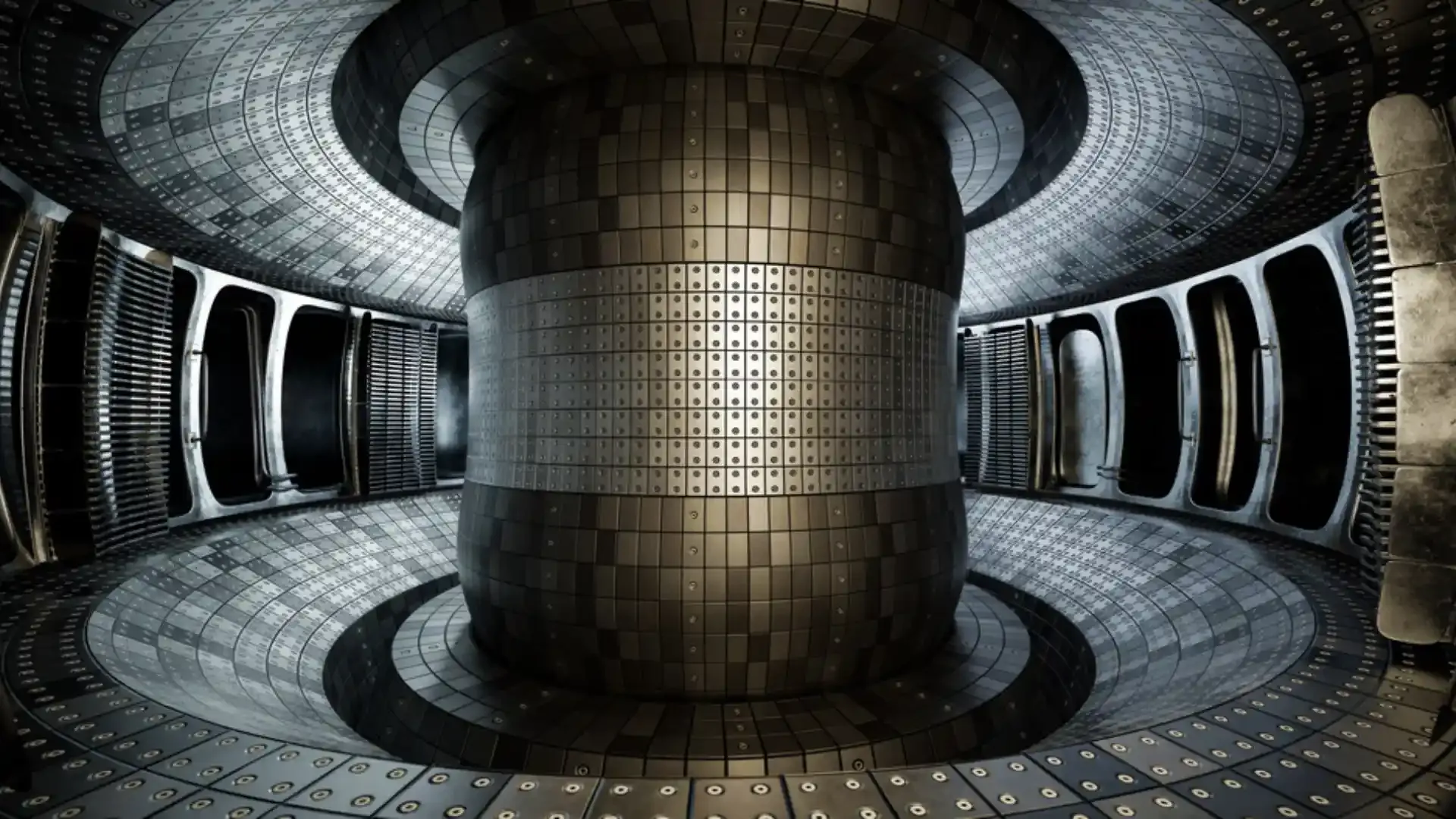
Korean “Artificial Sun” Achieves Record-Breaking Fusion Reaction

Korean “Artificial Sun” Achieves Record-Breaking Fusion Reaction (Source: Depositphotos)

58
SHARES
322
VIEWS
FacebookTwitterRedditWhatsAppLinkedInFacebook

South Korean researchers have used the Korea Superconducting Tokamak Advanced Research (KSTAR) device, a nuclear fusion reactor that functions as an “Artificial Sun.”

At seven times the temperature, this is not far from the Sun’s core, around 15 million degrees Celsius

South Korean researchers have used the Korea Superconducting Tokamak Advanced Research (KSTAR) device, a nuclear fusion reactor that functions as an “Artificial Sun,” to break a new world record. A reliable news source reported that the team experimented between December 2023 and February 2024, producing plasma temperatures of 100 million degrees Celsius for 48 seconds. The temperature of the Sun’s core, which is 15 million degrees Celsius, is seven times higher than this.

The previous record for the facility was for only about 30 seconds. This was established in 2021. Si-Woo Yoon, director of KSTAR Research Centre, stated that thorough hardware testing and campaign preparation had enabled them to achieve results. The results surpassed those of the previous KSTAR records in a short period of time. This was said to be their first experiment run
in the environment of the new tungsten diverters.

Challenges in Maintaining High Plasma Temperatures

Because of “the unstable nature of the high-temperature plasma,” it was difficult to extend the period spent at that temperature. Thus, Mr. Yoon called the new record a significant milestone. Furthermore, he said that by 2026, scientists plan to maintain plasma temperatures of 100 million degrees Celsius for 300 seconds.

The development of the world’s largest tokamak, the International Thermonuclear Experimental Reactor (ITER) in southern France, which intends to show the feasibility of fusion energy, is expected to be greatly aided by the achievements made in South Korea. ITER is a type of international nuclear fusion research and engineering megaproject aimed at creating energy through a fusion process close to that of the Sun. It is based in Saint-Paul-lès-Durance, South France.

Nuclear fusion is the process of fusing two atoms to release enormous amounts of energy in an attempt to mimic the reaction that powers the sun and other stars. Fusion can produce endless energy without emitting carbon dioxide that warms the planet.

The most popular method of producing fusion energy is a tokamak, a doughnut-shaped reactor where hydrogen variations are heated to extremely high temperatures to produce plasma. The future of nuclear fusion reactors depends on high-temperature, high-density plasmas that allow for long-duration reactions.

Scientists Target Commercial Fusion Energy

By making adjustments to the procedure, such as substituting tungsten for carbon in the “diverters” that draw out heat and contaminants from the fusion reaction, the KFE scientists claimed to have been able to prolong the reaction time. Mr. Yoon stated that this will be very
beneficial in ensuring that ITER operates as expected on schedule and in advancing the commercialization of fusion energy.

This statement comes after a string of achievements in the field of fusion research, such as a record-breaking fusion energy output near Oxford, England, and a successful reaction at the National Ignition Facility in the United States that produced greater energy than was used to power it.

This significant achievement also marks the beginning of the process towards nuclear fusion producing clean, inexhaustible energy and lays the way for ITER, the largest fusion experiment in history.

Source: source URL
Tags: Artificial SunenergyITERNuclear fusionSouth KoreanUnited States
The Global Economics

The Global Economics

The Global Economics Limited is a UK based financial publication and a bi-annual business magazine giving thoughful insights into the financial sectors on various industries across the world. Our highlight is the prestigious country specific Annual Global Economics awards program where the best performers in various financial sectors are identified worldwide and honoured.

Related Posts

Woodside’s Louisiana LNG Project to receive $1.9 billion investment from Gas Operator Williams
Energy

Woodside’s Louisiana LNG Project to receive $1.9 billion investment from Gas Operator Williams

by The Global Economics
October 23, 2025
UK Launches Green Hydrogen Blend in National Gas Grid For the First Time
Energy

UK Launches Green Hydrogen Blend in National Gas Grid For the First Time

by The Global Economics
October 13, 2025
LG Energy Solution Forecasts 34% Profit Jump as US EV Buyers Race for Tax Incentives
Energy

LG Energy Solution Forecasts 34% Profit Jump as US EV Buyers Race for Tax Incentives

by The Global Economics
October 13, 2025
TC Energy Shifts Focus in the US While Keeping an Eye on Canadian Opportunities
Energy

TC Energy Shifts Focus in the US While Keeping an Eye on Canadian Opportunities

by The Global Economics
September 24, 2025
Iraq Signs Deal With TotalEnergies and QatarEnergy LNG To Change Its Energy Future
Energy

Iraq Signs Deal With TotalEnergies and QatarEnergy LNG To Change Its Energy Future

by The Global Economics
September 16, 2025
Twitter Youtube LinkedIn Soundcloud
the global economics logo

The Global Economics Limited is a UK based financial publication and a Bi-Monthly business magazine giving thoughtful insights into the financial sectors on various industries across the world. Our highlight is the prestigious country specific Annual Global Economics awards program where the best performers in various financial sectors are identified worldwide and honoured.

DMCA.com Protection Status

  • Privacy
  • Legal
  • Terms of Use
  • Client’s Voice
  • Server Status

norton verified - the global economics

Latest Posts

e& Switches to Google Apigee Hybrid, Setting New Standards in UAE Telecom

e& Switches to Google Apigee Hybrid, Setting New Standards in UAE Telecom

October 27, 2025
Japan’s JPYC Launches The World's First Yen-Backed Stablecoin

Japan’s JPYC Launches The World’s First Yen-Backed Stablecoin 

October 27, 2025
Intel Reports Profits Exceeded Expectations In Q4 Due To Increased Investments, Shares Rise 7%

Intel Reports Profits Exceeded Expectations In Q4 Due To Increased Investments, Shares Rise 7% 

October 24, 2025
Download The Global Economics PWA to your mobile or Desktop
PWA App Download
Download The Global Economics Android App to your mobile or Desktop
Android App
Download The Global Economics IOS App to your mobile or Desktop
IOS App

All Rights Reserved © 2020 | 🇬🇧 The Global Economics, Business Finance Publication - www.theglobaleconomics.uk 🌏

Welcome Back!

Sign In with Facebook
Sign In with Linked In
OR

Login to your account below

Forgotten Password? Sign Up

Create New Account!

Sign Up with Facebook
Sign Up with Linked In
OR

Fill the forms below to register

*By registering into our website, you agree to the Terms & Conditions and Privacy Policy.
All fields are required. Log In

Retrieve your password

Please enter your username or email address to reset your password.

Log In
No Result
View All Result
  • About us
  • Awards
  • Magazine
  • Client’s Voice
  • Exclusive Coverage
  • Nominate
  • Login
  • Sign Up

All Rights Reserved © 2020 | 🇬🇧 The Global Economics, Business Finance Publication - www.theglobaleconomics.uk 🌏

This website uses cookies. By continuing to use this website you are giving consent to cookies being used. Visit our Privacy and Cookie Policy.
Go to mobile version