
How Underground Mega-Projects Are Reshaping the Region’s Infrastructure Economy

The Gulf’s next infrastructure revolution may not be visible from the skyline. Beneath its glittering towers, expanding business districts and ambitious urban developments, a new frontier is taking shape: a growing reliance on underground construction. From metro tunnels and road underpasses to utility corridors, drainage networks and strategic transport links, the region’s subterranean infrastructure is becoming an increasingly important part of its economic development story.
For decades, the Gulf Cooperation Council (GCC) economies have demonstrated their ambitions through landmark airports, artificial islands, highways and towering commercial buildings. Now, as cities become denser and transport networks expand, governments and developers are looking beneath the surface to address congestion, improve connectivity, strengthen urban resilience and make more efficient use of limited land in valuable city centres. This shift is creating opportunities across engineering, construction, transport, real estate, specialist equipment and infrastructure finance. Yet underground development also brings formidable challenges, from difficult ground conditions and groundwater management to high capital expenditure and complex project delivery. The Gulf’s underground construction boom is therefore not simply an engineering story; it is a business transformation shaped by urbanisation, economic diversification and the long-term demands of modern cities.
The commercial logic behind underground construction is becoming harder to ignore. In major Gulf cities, surface-level development competes for space with residential communities, shopping districts, office towers, airports and public amenities. Expanding roads across increasingly developed areas can require expensive land acquisition, disrupt established neighbourhoods and place additional pressure on urban planning. Tunnels offer an alternative by allowing transport and essential services to pass beneath existing development.
For governments, the benefits extend beyond traffic management. Underground networks can improve connections between business districts, residential areas and transport hubs, while buried utility and drainage systems can support more reliable urban services. For property developers, better connectivity may strengthen the appeal of locations near metro stations and integrated transport interchanges. However, these benefits depend on effective planning, passenger demand, operating efficiency and the cost of delivering the infrastructure.
The scale of the opportunity is attracting attention across the construction industry. In its September 2026 business review, MEED highlighted the Gulf's emerging tunnelling boom, identifying metro, sewerage and road infrastructure as important drivers of the region's expanding underground construction market. The trend reflects a broader shift in infrastructure investment: the focus is increasingly on creating interconnected urban systems rather than delivering isolated landmarks. Dubai provides a clear illustration of how underground engineering is becoming integral to the region's transport strategy. On 3 May 2026, the Roads and Transport Authority announced the launch of primary tunnelling works for the Dubai Metro Blue Line, a project representing an investment of more than AED20.5 billion.
The planned 30-kilometre route comprises 15.5 kilometres underground and 14.5 kilometres above ground. It includes 14 stations, among them four underground stations, and is designed to serve nine key districts with a projected population of approximately one million under the Dubai 2040 Urban Master Plan. The project demonstrates the increasingly sophisticated role of tunnelling in urban expansion. Rather than relying exclusively on elevated structures or surface transport, the network combines different engineering approaches to connect growing communities. This can help preserve valuable land for other uses while enabling transport infrastructure to operate through densely developed areas. Its commercial significance extends to contractors, specialist engineering firms, equipment manufacturers and suppliers of construction materials. Tunnel boring systems, ground monitoring technology, ventilation equipment, fire protection and electrical installations all form part of the wider supply chain. As underground transport becomes more prominent, demand can also grow for specialist maintenance, inspection and operational services.
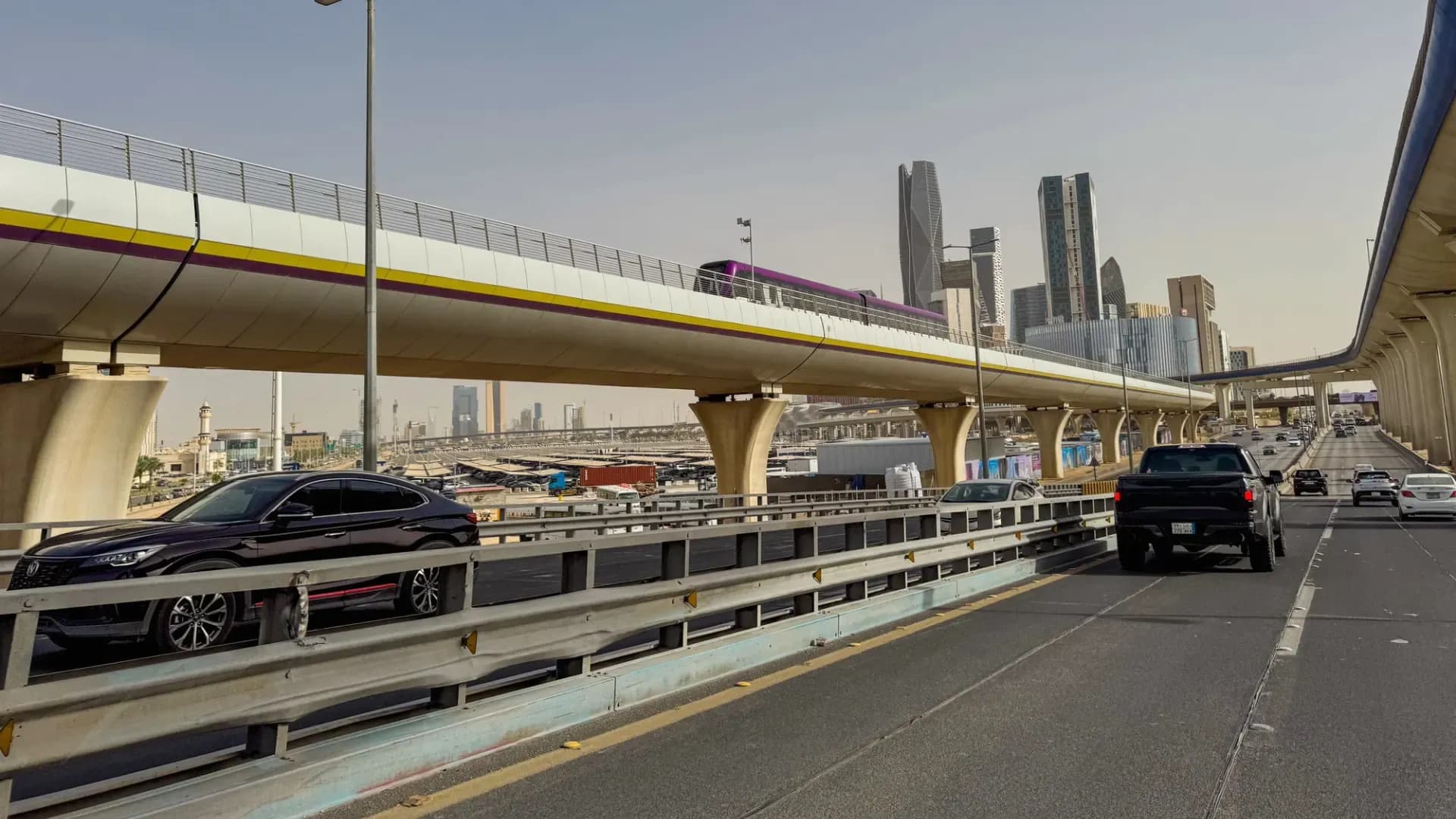
For Dubai, the longer-term objective is to connect developing residential and commercial districts with the wider metropolitan transport system. Whether the expected economic benefits materialise will depend on ridership, service quality and the successful integration of stations with surrounding developments. Saudi Arabia's capital is pursuing a comparable approach as it develops a more comprehensive public transport network. The Riyadh Metro, inaugurated in November 2024, has become a central element of the city's urban mobility programme. Continued expansion is intended to strengthen links between residential communities, educational institutions, healthcare facilities, cultural destinations and major development zones.
On 12 January 2026, the Saudi Press Agency reported that the Royal Commission for Riyadh City had awarded the design and construction contract for an 8.4-kilometre extension of the Red Line towards the Diriyah Gate development. The project includes five new stations, with 7.1 kilometres of deep underground tunnels and 1.3 kilometres of elevated tracks. Completion was expected to take approximately six years. This expansion illustrates how tunnelling can support urban growth without requiring every new transport corridor to occupy additional surface space. Underground alignments are particularly relevant where established roads, buildings and other infrastructure restrict the available construction area.
The economic implications extend into real estate. Improved access to employment centres and public transport can influence residential demand, commercial leasing and development patterns. Nevertheless, higher property values are not guaranteed: they depend on factors including affordability, the supply of new homes, local amenities and the actual convenience offered by the transport network. For Saudi contractors and international engineering companies, projects of this scale also create opportunities to develop technical expertise and strengthen partnerships. Their ability to deliver safely, control costs and meet demanding schedules will influence the wider market's appetite for further underground infrastructure investment.
While metro systems attract considerable attention, the Gulf's underground construction story extends well beyond passenger transport. Drainage tunnels, sewerage networks and underground water-management infrastructure are becoming important components of long-term urban resilience. Qatar offers a particularly relevant example. On 16 February 2026, the Qatar News Agency reported that the Public Works Authority, Ashghal, had announced 20 infrastructure and public-facility projects with an estimated combined value of approximately QR11.5 billion. Eight projects worth around QR7 billion were scheduled for tender in a subsequent phase, including the Southern Strategic Tunnel and Western Strategic Tunnel for surface-water and groundwater drainage in the southern area.
These proposed drainage projects illustrate a different commercial driver from metro construction. Instead of moving passengers, large underground systems can help manage water, reduce flooding exposure and protect roads, buildings and essential services. Their importance is particularly evident in cities where intense rainfall can overwhelm drainage networks designed for different conditions. For governments and businesses, the financial case involves more than the construction budget. Effective drainage infrastructure may reduce disruption to commercial activity, transport operations and residential areas. However, achieving these outcomes requires careful hydraulic modelling, suitable tunnel capacity, reliable pumping systems where needed and continuing maintenance.
Such projects also create opportunities for specialist contractors working in excavation, waterproofing, reinforced concrete, underground utilities and environmental engineering. In this segment, the value of infrastructure is measured not only by what it enables but also by the damage and disruption it may help prevent. The Gulf's expanding project pipeline is increasing the importance of specialist construction technology. Tunnel boring machines can excavate underground passages while supporting the surrounding ground, although the appropriate method depends on geology, tunnel diameter, depth, groundwater conditions and the type of infrastructure being built.