
Top 10 The Global Nuclear Energy Hub
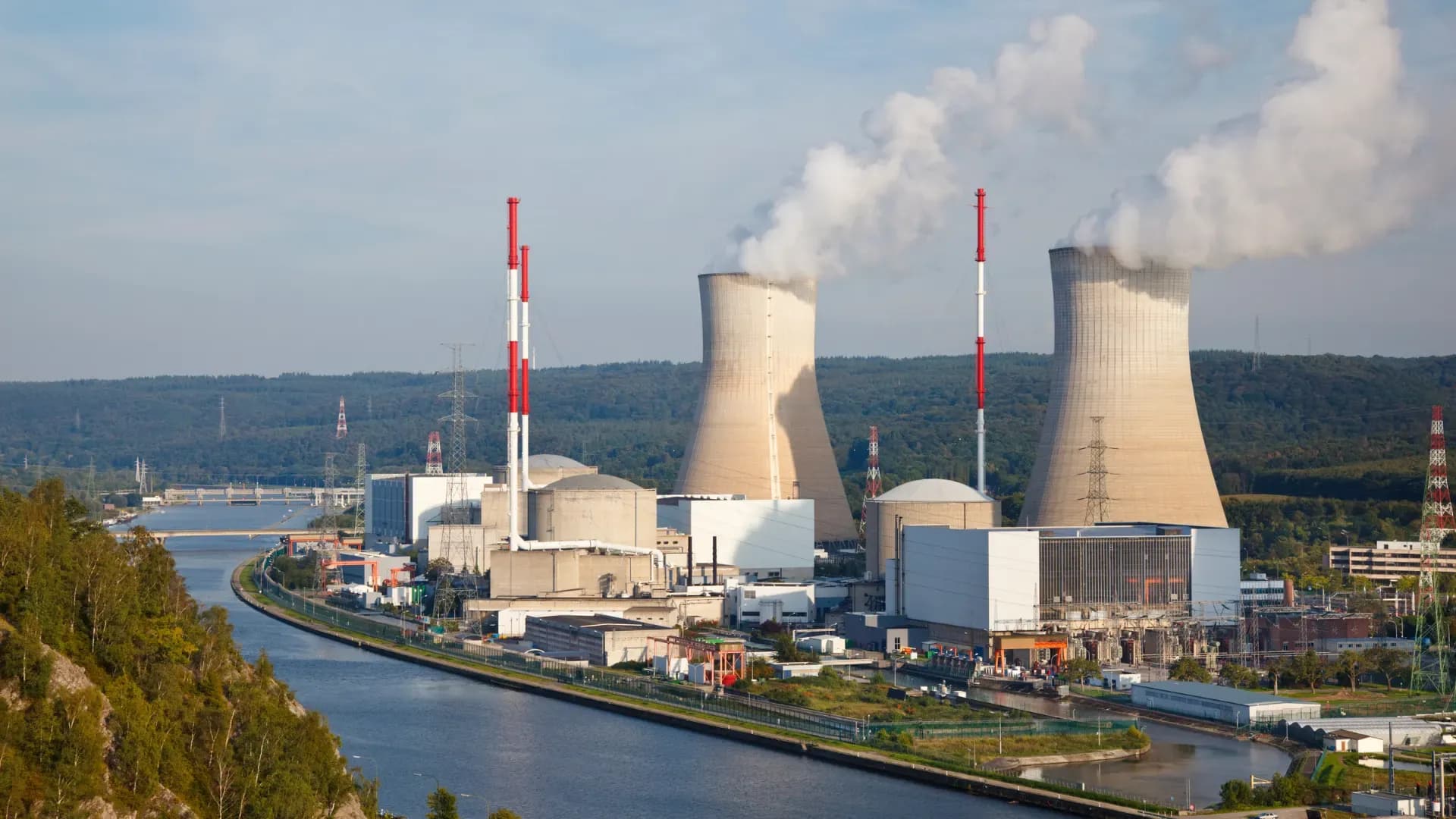

Nuclear energy is entering a new investment cycle. In 2025, global nuclear generation reached a record 2,702 TWh, supplying around 9% of global electricity, while roughly 80 reactors were under construction in 15 countries by September 2026. Asia accounts for most of the new-build activity, but the United States, France, the UK and Canada are also developing new-generation reactors, including SMRs.
1. China - The World’s Fastest-Scaling Nuclear Power Hub
China has emerged as the largest centre of new nuclear construction, with 64 operating reactors and 38 under construction as of September 2026. Its 15th Five-Year Plan targets around 110 GWe of nuclear capacity by 2030, supported by a powerful domestic supply chain led by CNNC and CGN. China is also developing its own SMRs and advanced reactors while pursuing nuclear technology exports. Its goal is to combine nuclear power with renewables, reduce coal dependence, strengthen energy security and build a globally competitive nuclear manufacturing ecosystem.
2. Russia - The Reactor Export and Fast-Nuclear Powerhouse
Russia’s nuclear strategy extends beyond domestic electricity generation. Rosatom operates a major integrated nuclear industry spanning reactor construction, fuel, technology and international projects, with Russia currently involved in building roughly 20 reactors abroad. Domestically, seven reactors are under construction, while the government’s 2050 energy strategy targets a 25% nuclear share by 2045 and calls for 38 new units. Russia is also pursuing fast reactors and a closed fuel cycle through its Proryv programme, aiming to commercialise advanced nuclear technology domestically and internationally.
3. India - The 100-GW Nuclear Expansion Story
India is positioning nuclear power as a major pillar of its long-term energy-security strategy. The country currently operates 24 reactors, has eight under construction and has established a national ambition of reaching 100 GWe of nuclear capacity by 2047. Its programme combines conventional pressurised heavy-water reactors, fast-breeder technology and emerging small modular reactors. The 500 MWe Prototype Fast Breeder Reactor at Kalpakkam achieved first criticality in 2026. India’s goal is to expand reliable low-carbon electricity while supporting industrialisation, rising electricity demand and future technologies such as SMRs.
4. South Korea - The High-Tech Nuclear Export Hub
South Korea combines a sizeable domestic nuclear fleet with an increasingly international reactor business. Its 26 reactors provide about one-third of national electricity, while new APR1400 units are under construction and the country plans additional large reactors plus 700 MWe of SMR capacity by 2038. KHNP is also expanding overseas, including its major Czech reactor project and cooperation on nuclear development in other Asian markets. South Korea’s strategic goal is to maintain nuclear generation at home while strengthening its position as a competitive exporter of advanced reactors and nuclear services.
5. United States - The Advanced-Reactor and SMR Innovation Hub
The United States remains the world’s largest nuclear electricity producer, generating 816 TWh in 2024, and is now attempting to rebuild its new-reactor pipeline. National ambitions include quadrupling nuclear capacity to around 400 GWe by 2050, alongside accelerated deployment of advanced reactors. Westinghouse, TerraPower, X-energy, GE Hitachi, Oklo and other developers are pursuing large reactors, SMRs and advanced designs. The wider goal is to create dependable electricity for a growing economy, including energy-intensive industries and data centres, while rebuilding domestic nuclear manufacturing and fuel capabilities.
6. France - Europe’s Nuclear Renaissance Hub
France is seeking to reinforce its nuclear position through a major new-build programme centred on EDF’s EPR2 technology. The government has backed a programme of six proposed EPR2 reactors at Penly, Gravelines and Bugey, with an option for additional reactors. Site preparation has already progressed at Penly, while environmental authorisation for the Gravelines pair was granted in August 2026. France’s objective is to preserve nuclear power as a foundation of its electricity system, replace ageing capacity and provide long-term low-carbon electricity while strengthening Europe’s domestic nuclear industrial base.
7. United Kingdom - The Next-Generation Nuclear and SMR Hub
The UK is developing a diversified nuclear pipeline covering large reactors and small modular technology. Sizewell C is progressing alongside Hinkley Point C, while the government has selected Wylfa in Wales for the first deployment of Rolls-Royce SMRs, with three units initially planned. Multiple advanced designs are also entering or progressing through the UK’s Generic Design Assessment process, including GE Hitachi’s BWRX-300, Holtec’s SMR-300, TerraPower’s Natrium and X-energy’s Xe-100. The UK’s goal is to rebuild nuclear capacity, improve energy security and develop a domestic advanced-reactor supply chain.
8. Japan - The Nuclear Restart and Advanced-Reactor Hub
Japan is rebuilding its nuclear industry after the disruption caused by the 2011 Fukushima accident. By September 2026, 15 reactors had restarted, while seven others were progressing through restart procedures. Japan’s 2040 energy strategy retains a nuclear target of around 20%, while government policy also supports next-generation reactor development and replacement of ageing units. Revised nuclear policy guidelines envisage replacing several reactors during the 2040s and additional units during the 2050s. Japan’s objective is to strengthen energy security, reduce imported-fuel dependence and retain nuclear expertise within its industrial economy.
9. Canada - The SMR Commercialisation Hub
Canada is becoming an important testing ground for commercially deployable small modular reactors. Ontario Power Generation began construction of the first Darlington BWRX-300 SMR in June 2026, following regulatory approval in 2025. The project is particularly significant because Canada is attempting to move SMR technology from design and demonstration towards repeatable commercial deployment. Beyond Darlington, additional reactors have been proposed across the country. Canada’s wider objective is to expand reliable low-carbon electricity, support industrial demand and establish domestic expertise that could position Canadian SMR technology for wider international markets.
10. Saudi Arabia - The Emerging Middle Eastern Nuclear Hub
Saudi Arabia is still an emerging nuclear market rather than an operating nuclear-power country, but its programme has strategic significance. The Saudi National Atomic Energy Project covers large reactors, SMRs, nuclear fuel development and regulatory infrastructure. The country has pursued proposals for a first large nuclear plant and established the Saudi Nuclear Energy Holding Company as the programme developer. In 2026, Saudi Arabia and the United States signed a civil nuclear cooperation agreement and safeguards agreement. Its goal is to diversify electricity generation, support desalination and industrial activity, and develop a domestic nuclear-energy ecosystem.