
Chile, Colombia and Peru Set Their Sights on a Unified Latin American Stock Market


Latin America's financial landscape could be approaching a significant transformation as Chile, Colombia and Peru advance towards integrating their national stock exchanges into a more unified regional capital market. The initiative, led by nuam, represents an ambitious attempt to overcome longstanding barriers between three economies and establish a more competitive investment destination for domestic and international investors.
For decades, Latin American stock markets have faced challenges associated with fragmented trading infrastructure, relatively limited liquidity, regulatory differences and uneven international participation. Although the region possesses considerable natural resources, established financial institutions and growing corporate sectors, its capital markets have not always offered the scale and accessibility required to compete more effectively with larger international financial centres.
The integration of the Santiago Stock Exchange, Colombia Stock Exchange and Lima Stock Exchange under Nuam seeks to address these structural limitations. Rather than simply bringing three institutions under common ownership, the project aims to develop shared technological infrastructure, harmonised operating arrangements and more efficient cross-border investment mechanisms. The ambition is considerable: to create a regional marketplace where investors can access opportunities across three countries through a more consistent and streamlined market structure. However, the real measure of success will depend on whether technological progress can translate into deeper liquidity, broader participation and sustainable economic benefits.
The economic rationale behind the initiative becomes clearer when considering the combined scale of the three exchanges. According to reporting on nuam's first-half 2026 performance, the combined market value of companies listed across Chile, Colombia and Peru reached approximately US$539 billion in June 2026, representing a 38% year-on-year increase. The figure highlights the considerable financial resources already represented across these markets, even before full operational integration has been achieved.
Each country also brings a distinctive economic profile to the proposed marketplace. Chile has a well-established financial sector, alongside significant exposure to copper, lithium, energy and mining. Colombia offers opportunities through banking, infrastructure, consumer industries, energy and financial services. Peru contributes substantial exposure to mining, metals, industrial commodities and financial institutions.
These differences could become one of nuam's strongest advantages. Instead of relying on a single country's economic performance, investors could gain access to a broader selection of industries and corporate opportunities across the three economies. For international investment managers seeking exposure to Latin America's natural resources, infrastructure development and expanding consumer markets, a more connected exchange could offer a convenient regional investment proposition.
The MSCI nuam Index, introduced in July 2025, provides another indication of this ambition. The index tracks 56 companies from the three countries, with a combined market capitalisation of approximately US$319 billion at its launch. It offers a regional benchmark that could support the development of investment products and help international investors assess the performance of the combined markets.
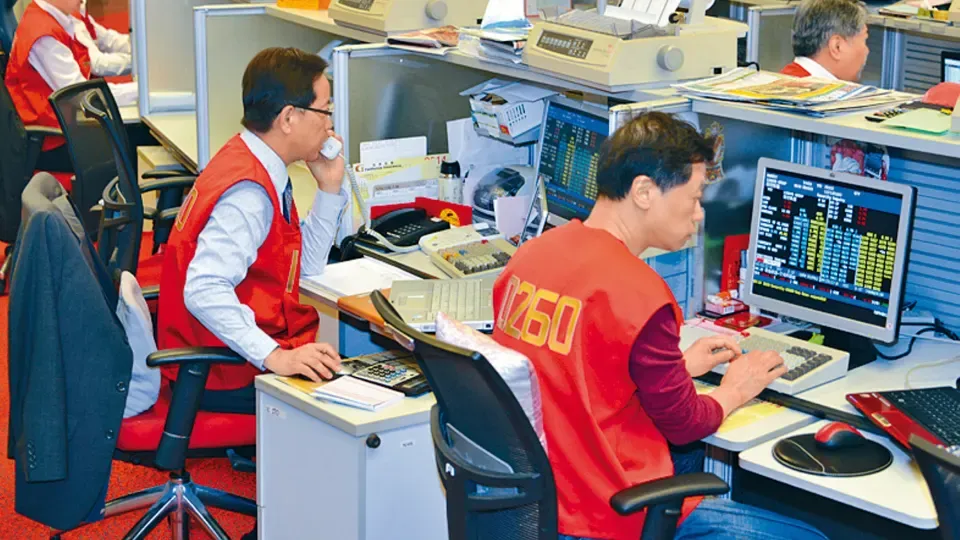
One of the most important developments arrived in 2026, when nuam completed the migration of all three exchanges to a common equity trading technology infrastructure. The transition took place in stages. Colombia adopted the new platform in March 2026, followed by Peru in April. Chile completed the process on 20 July 2026, making it the final market to migrate. The shared infrastructure uses Nasdaq technology, including its Eclipse matching engine, providing the three exchanges with a common technological foundation for equity trading.
This achievement is significant because different trading systems can create operational complications for brokers, financial institutions and investors attempting to access multiple markets. A common platform can improve processing capacity, support operational consistency and make it easier to develop regional trading services. However, an important distinction remains. Completing the technology migration does not mean that the three exchanges have already become one fully operational marketplace. Trading infrastructure has been harmonised, but several elements of the broader integration process, particularly clearing, settlement and regulatory interoperability, still require further development.
In its July 2026 announcement, nuam described the completion of the shared trading infrastructure as a fundamental milestone rather than the conclusion of the entire integration programme. The next stage will arguably be more complicated than the technological transition. Establishing a genuinely integrated stock market requires more than common trading software. It also demands compatible legal frameworks, effective investor protection, reliable settlement mechanisms and cooperation between national financial regulators.
Progress has nevertheless been encouraging. In September 2026, Bloomberg Línea reported that approximately 95% of the market rules across the three countries had been harmonised, according to nuam's market management leadership. The remaining differences include regulatory approvals, access arrangements and the coordination of trading hours, which vary between Chile and the other two markets.
Peru's clearing infrastructure remains particularly important. The country has been working towards establishing a central counterparty clearing house, which would strengthen the management of counterparty risk and support interoperability with the other markets. Colombia and Chile also have outstanding regulatory and operational requirements before the wider model can become fully functional.
The proposed settlement arrangements are equally significant. nuam is targeting a transition towards T+1 settlement during the second half of 2027. Under this system, eligible securities transactions would generally be settled one business day after the trade date, rather than the traditional two-business-day cycle.
A shorter settlement period can reduce the time that capital remains exposed to counterparty risk and improve the efficiency with which investors deploy funds. Nevertheless, successful implementation will require coordinated upgrades across clearing houses, central securities depositories, custodians, banks and brokers. J.P. Morgan's September 2026 industry report identifies post-trade modernisation as a central requirement for achieving this objective.
A major objective of the integration is to make Latin American equities more accessible to international investors. At present, investors seeking exposure to Chile, Colombia and Peru may encounter different operational procedures, settlement arrangements, currency requirements and regulatory conditions. These differences can increase transaction costs and complicate portfolio management.
A more integrated marketplace could simplify these processes by offering a more consistent route into the three economies. For international asset managers, pension funds, institutional investors and investment banks, this could make regional exposure easier to manage and potentially more attractive.
Currency arrangements are another important consideration. Chile, Colombia and Peru do not share a common currency, and their respective markets remain exposed to different foreign-exchange movements. However, nuam's leadership has indicated that investors could have the option of conducting transactions in local currencies or US dollars, providing greater flexibility when managing currency exposure.