
Lufthansa-TAP Deal: Reshaping European Aviation

Portugal’s aviation industry is approaching a defining moment as German aviation giant Lufthansa moves closer to securing a strategic position in TAP Air Portugal. The agreement represents more than a significant corporate transaction; it could reshape European airline competition, strengthen transatlantic connectivity and establish Lisbon as an increasingly influential gateway between Europe, South America and Africa. With Portugal seeking to attract international investment while protecting its national aviation interests, the proposed partnership raises an important question: could Lufthansa’s expansion into TAP transform the balance of power in European aviation?
The Portuguese government announced on 14 October 2026 that it had selected Lufthansa Group as its preferred investor for the partial privatisation of TAP Air Portugal, defeating a competing proposal from Air France-KLM. The decision followed an extended bidding process in which both European airline groups submitted improved financial and strategic proposals.
Lufthansa's offer was considered financially stronger, reportedly exceeding its rival's proposal by approximately 16%. The first phase of the transaction covers the acquisition of a 44.9% stake in TAP, with a further 5% reserved for the airline's employees. The Portuguese government will retain a 50.1% majority interest at this stage. The overall consideration announced by the Portuguese government amounts to approximately €1.201 billion, including the employee share allocation.
An important development followed on 3 November 2026, when Lufthansa and the Portuguese government formally signed the share-sale agreement in Lisbon. However, the transaction remains subject to regulatory approvals, particularly from the European Commission. Consequently, the agreement represents a major step towards privatisation rather than the completed integration of TAP into Lufthansa's operations.
The selection marks a significant victory for Lufthansa in its wider European expansion strategy, giving the German group an opportunity to strengthen its international network through one of Europe's most strategically positioned national airlines. TAP Air Portugal possesses an international network that offers considerable strategic value beyond the size of its existing fleet. Its Lisbon hub provides important connections between European destinations and markets across Brazil, Portuguese-speaking Africa and North America.
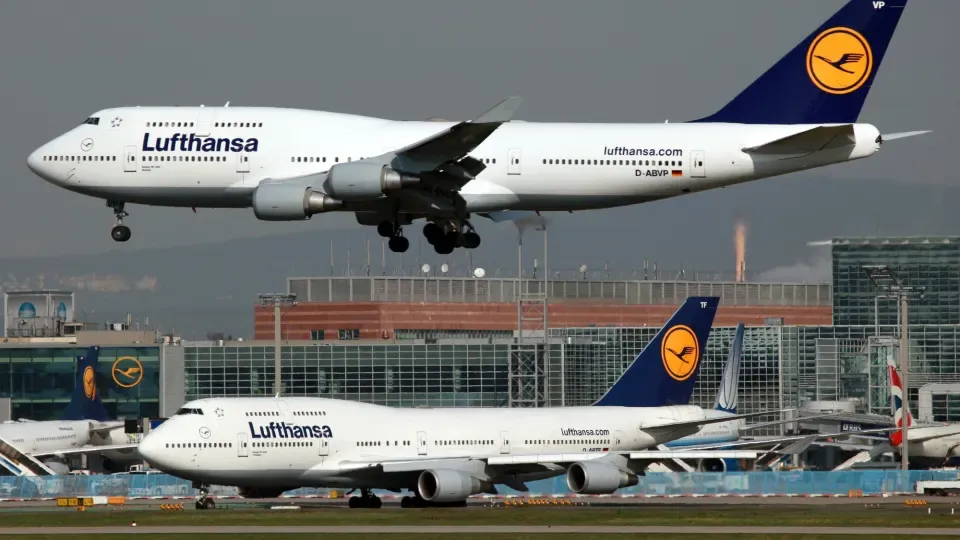
For Lufthansa, these geographical advantages could address an important gap in its long-haul network. While the German group already operates an extensive European and international network through Lufthansa, SWISS, Austrian Airlines, Brussels Airlines and ITA Airways, TAP offers a particularly attractive position in the South Atlantic. According to Lufthansa's November announcement, the proposed partnership could increase its share of the Europe-Latin America market from approximately 9% to around 20%. This would considerably strengthen its competitive position against other major international airline groups.
Lisbon is also expected to become Lufthansa's seventh hub, complementing its existing network of European hubs. The arrangement could improve passenger connections, expand commercial opportunities and provide greater flexibility in scheduling long-haul services. The strategic importance of TAP therefore extends beyond acquiring another airline. It offers Lufthansa access to established markets, valuable airport infrastructure and an international customer base that would be difficult to reproduce through organic expansion alone.
One of the most significant consequences of the proposed agreement could be the growing importance of Lisbon within Europe's aviation network. Portugal occupies a geographically advantageous position on the western edge of Europe, making its capital an attractive departure point for flights connecting European cities with destinations across the Atlantic. TAP has already developed an established presence in Brazil and other Portuguese-speaking markets, providing Lufthansa with an opportunity to strengthen these connections.
The proposed expansion is not limited to Lisbon. Lufthansa has also identified Porto, Madeira, the Azores and the Algarve as important elements of its Portuguese growth strategy.
The development of Porto as a stronger operational base could create additional opportunities for regional economic activity, tourism and international business travel. The Portuguese government has indicated that the investment proposal includes establishing Porto as a second base, with eight long-haul aircraft planned for the airport. Such developments could improve connectivity beyond the capital and distribute the economic benefits of aviation investment across different Portuguese regions.
However, achieving this ambition will require sufficient airport capacity, competitive operating costs, efficient infrastructure and a sustained increase in passenger demand. Lufthansa's proposed investment could have implications for the wider European aviation market, particularly its competitive relationship with Air France-KLM and International Airlines Group (IAG). Air France-KLM had been competing directly with Lufthansa for the opportunity to acquire TAP. Its unsuccessful bid represents a strategic setback, particularly given the importance of Lisbon's connections to Latin America.
The competition for TAP also demonstrates how European airline groups are increasingly using acquisitions and strategic partnerships to strengthen their international networks rather than relying exclusively on organic growth. Lufthansa's existing multi-brand structure provides an established model for integrating national airlines while maintaining individual brands and operational identities. Its experience with SWISS, Austrian Airlines and Brussels Airlines, alongside its investment in ITA Airways, illustrates the group's preference for building a broader network of complementary carriers.
IAG, which owns British Airways, Iberia and other airline businesses, remains another important competitor in the European market. Its established connections between Europe and Latin America mean that Lufthansa's proposed expansion through TAP could intensify competition on several important international routes. Nevertheless, the outcome will depend on how successfully Lufthansa develops TAP's network without undermining its existing commercial strengths.
Beyond airline competition, the agreement presents potentially significant economic opportunities for Portugal. The Portuguese government's announcement outlined an ambitious expansion programme for TAP, including plans to increase its fleet to 117 aircraft by 2035 and potentially 130 thereafter. The proposed fleet development could involve an additional investment of approximately €3 billion to €4 billion. Up to eight Airbus A350-900 aircraft could also be transferred to TAP from 2030 onwards.
Another important commitment involves the development of Lufthansa Technik's maintenance and engineering operations in Santa Maria da Feira, near Porto. The proposed investment of approximately €300 million is expected to support around 700 jobs, strengthening Portugal's position in the wider aerospace maintenance industry. Additional plans include a travel technology innovation hub in Aveiro, a corporate and operational services centre, and an aviation training initiative in Tancos.
These investments could generate economic benefits extending beyond the airline itself. Aviation maintenance, engineering, technology, tourism and professional training could all benefit from a stronger international aviation presence. For Portugal, the challenge will be ensuring that these commitments translate into long-term employment, skills development and domestic industrial growth.
Despite its strategic attractiveness, TAP enters this new chapter against a challenging financial backdrop. The airline reported a net loss of €99.2 million during the first half of 2026, approximately 40% higher than its loss during the corresponding period of the previous year. Although passenger numbers increased to 8.2 million and operating revenue grew by 4.3% to just over €2 billion, rising fuel expenditure placed considerable pressure on its financial performance.
Fuel costs increased by 18.7% during the first six months, highlighting the vulnerability of airline profitability to geopolitical developments and international energy prices. These figures demonstrate why access to Lufthansa's financial resources, operational expertise and wider commercial network could prove valuable.
However, a larger airline group does not automatically guarantee stronger profitability. TAP will need to improve operational efficiency, manage fleet investment carefully, maintain competitive ticket prices and strengthen its revenue-generating routes. The success of the partnership will ultimately depend on whether network expansion can deliver sustainable financial returns rather than simply increasing the airline's geographical reach.