
Japan’s Rising Interest Rates: A New Era for Property Investment?

Japan’s property market is entering a new financial era as the Bank of Japan moves away from decades of exceptionally low borrowing costs. For investors, developers and prospective homeowners, the shift represents more than a monetary policy adjustment. It could reshape property valuations, financing strategies, rental yields and the international appeal of one of Asia’s most established real estate markets.
For years, Japan attracted domestic and international investors through relatively inexpensive financing, stable institutional structures and strong demand for property in major urban centres. However, as interest rates rise, the conditions that supported this investment environment are beginning to change. The central question is whether Japan’s property sector can maintain its momentum while adapting to a more expensive borrowing environment.
The Bank of Japan (BOJ) has been gradually dismantling its long-standing ultra-low interest-rate policy as inflation becomes more firmly established in the Japanese economy. Following increases in June and September 2026, the central bank raised its benchmark policy rate to 1.25 per cent in September, its highest level in more than three decades. It subsequently maintained the rate at that level at its 29–30 October policy meeting, signalling that further adjustments remain possible.
The latest developments suggest that the era of inexpensive money is drawing to a close. On 10 November, a summary of the October monetary policy meeting revealed that several BOJ policymakers favoured accelerating interest-rate increases, with some advocating a quicker move towards a neutral monetary policy position. Persistent inflation, higher energy costs and currency-related pressures were among the factors influencing their views. Although the timing of another increase remains uncertain, markets are increasingly considering the possibility of a further adjustment in December.
For Japan's property industry, this transition carries considerable significance. Real estate is particularly sensitive to changes in financing conditions because developers, institutional investors and individual buyers frequently depend on long-term borrowing. Even a relatively modest increase in lending rates can alter investment calculations, particularly when property valuations are already elevated.
One of the most immediate consequences of monetary tightening is the potential increase in mortgage and commercial property financing costs. For years, Japan's inexpensive borrowing environment enabled investors to purchase residential apartments, office buildings and income-generating assets with relatively affordable debt. However, higher interest rates could gradually reduce the profitability of leveraged investments.
Property investors commonly assess opportunities through rental income, operating expenses, financing costs and expected capital appreciation. When borrowing becomes more expensive, the difference between rental returns and financing expenses can narrow. Investors who previously relied on inexpensive loans may therefore need to reconsider acquisition prices, financing structures and their expectations of future returns.
The residential mortgage market is particularly exposed to this adjustment. According to research cited by the Japan Financial Strategy Center, 83.5 per cent of newly originated housing loans in fiscal 2024 were floating-rate loans, measured by loan value. This means a substantial proportion of borrowers could eventually experience higher repayments as lending benchmarks adjust. However, certain Japanese mortgage arrangements include repayment adjustment mechanisms that can delay or limit the immediate impact on monthly payments.
For prospective homeowners, this could influence purchasing decisions, particularly among younger households and buyers who depend heavily on mortgage financing. Higher monthly repayments may encourage some purchasers to postpone acquisitions, consider smaller properties or explore locations outside the most expensive metropolitan districts.
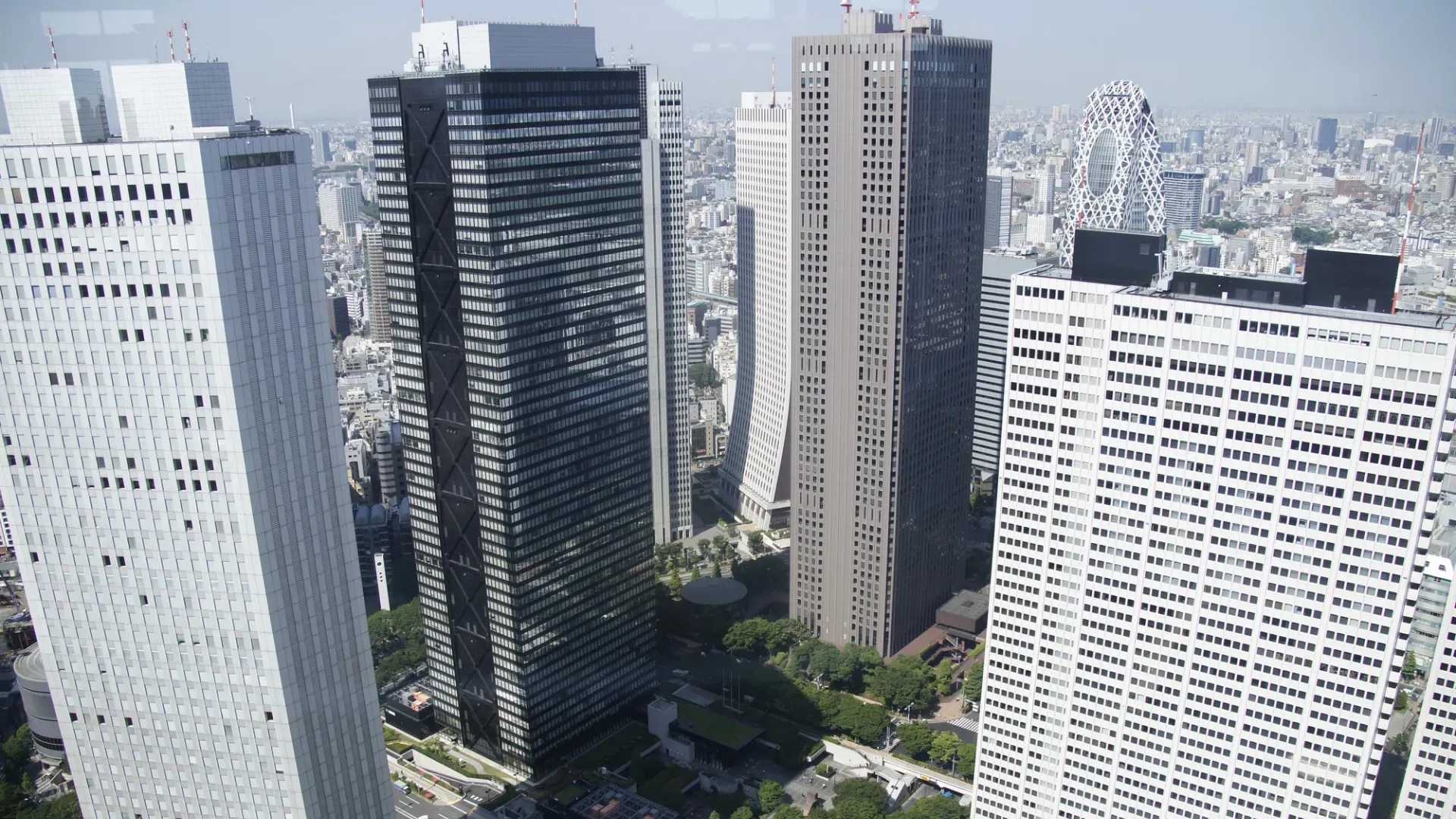
Despite the changing financial environment, Tokyo continues to demonstrate considerable resilience. The Japanese capital benefits from its position as a major international financial centre, a substantial employment market and a destination for domestic and overseas institutional investment.
Recent figures from CBRE highlight the strength of this market. Its October 2026 Japan Investment MarketView reported that commercial property investment reached approximately ¥2.21 trillion in the third quarter of 2026, representing a 4 per cent annual increase and a new quarterly record. Investment activity during the first nine months of the year also reached a record level. Residential, retail and hotel transactions recorded annual growth, supported by several substantial deals.
This performance demonstrates that rising interest rates have not yet discouraged investors from pursuing Japanese real estate opportunities. However, the composition of investment demand is evolving. Rather than concentrating exclusively on potential property appreciation, investors are increasingly examining rental income, occupancy levels, building quality and the long-term financial sustainability of their acquisitions.
Tokyo's office market is particularly important in this context. Demand for well-located commercial buildings, combined with limited availability of high-quality space, provides landlords with opportunities to increase rents. Investors purchasing buildings where existing rental agreements remain below prevailing market levels may also benefit from higher income as leases are renewed.
Japan's residential property market is likely to experience a more differentiated response to higher borrowing costs. Prime locations in Tokyo may retain their attractiveness, but expensive acquisition prices and reduced mortgage affordability could make certain residential investments increasingly challenging.
According to Japan Property Insight's reporting of Kenbiya's third-quarter 2026 data, the average asking price of residential investment condominium units nationwide reached ¥29.02 million between July and September, an increase of 9.22 per cent from the previous quarter. In Tokyo's 23 wards, the average reached ¥41.49 million, rising 13.30 per cent quarter on quarter. These figures represent advertised asking prices rather than completed transaction values.
The figures illustrate the considerable strength of residential investment demand, but they also raise questions about affordability and future rental returns. In Tokyo's 23 wards, the reported gross yield for newer condominium units stood at approximately 3.69 per cent, suggesting that investors purchasing expensive modern properties may have relatively limited income margins before financing and operating expenses.
Consequently, investors may become more selective about property age, location, rental potential and acquisition costs. Older buildings with attractive purchase prices, well-maintained properties and residential developments near major transport networks could receive greater attention where their rental economics remain favourable.
Japan's commercial property sector is also approaching an important adjustment. Office buildings, logistics facilities, shopping centres and hotels have different income characteristics, meaning that the effects of higher borrowing costs will not be uniform.
The most significant concern is the relationship between property yields and government bond returns. When interest rates increase, investors may demand stronger returns from real estate to compensate for the additional financing costs and perceived risks. This can place downward pressure on property valuations, particularly when rental income remains unchanged.
However, CBRE's September 2026 Cap Rate Survey reported that expected net operating income yields for prime Tokyo properties remained unchanged across asset categories during the third quarter, despite rising interest rates. This suggests that strong investor demand and expectations of rental growth are continuing to support property valuations.