
France’s Nuclear Renaissance: Can Atomic Power Secure Europe’s Energy Future?
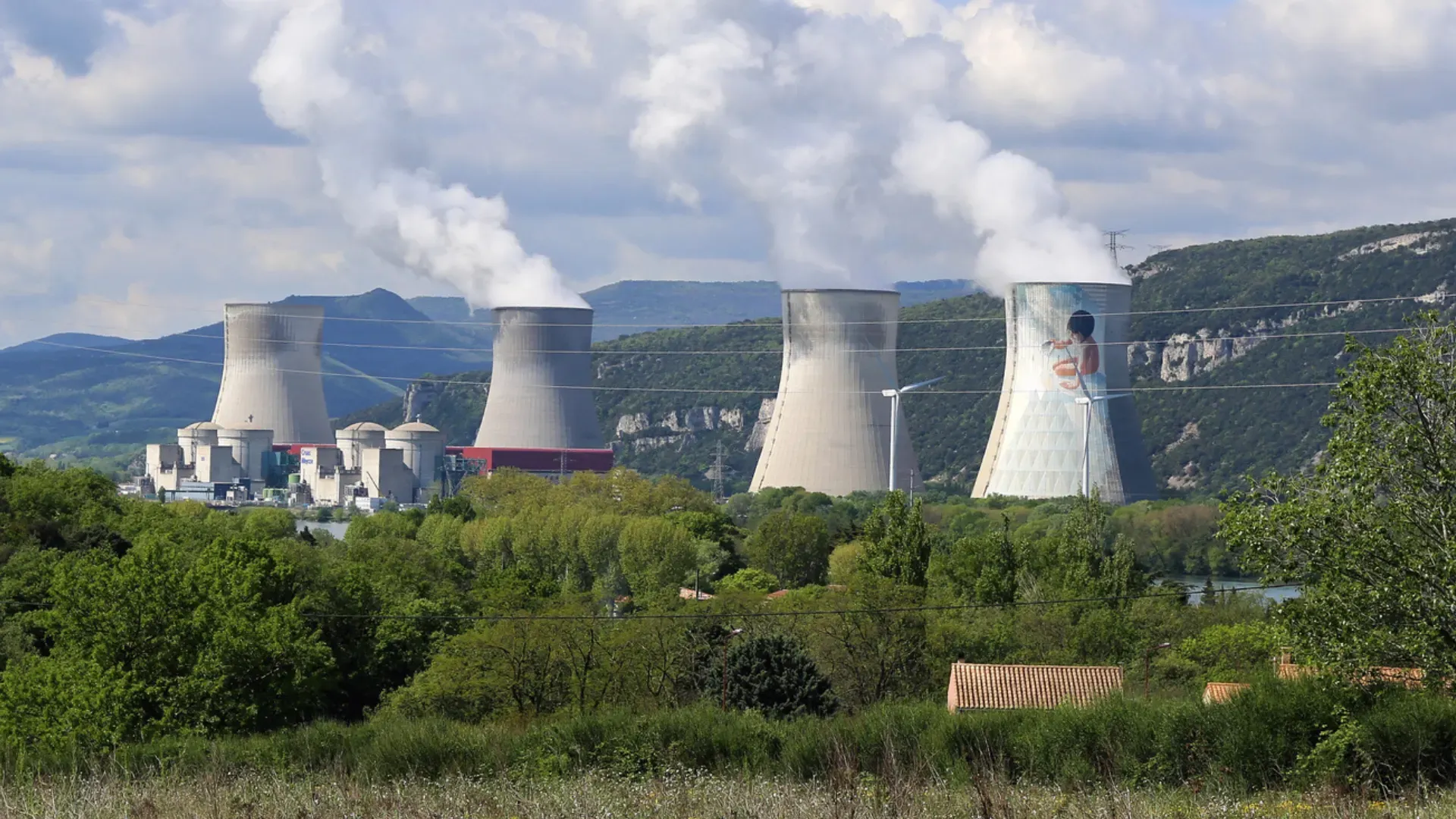

France is positioning nuclear energy at the centre of its long-term economic and energy strategy, as Europe confronts growing concerns over energy security, electricity affordability and the transition towards a low-carbon economy. With geopolitical uncertainty continuing to expose the vulnerabilities of international energy supply chains, Paris is strengthening its commitment to atomic power, viewing it not simply as a source of electricity but as a strategic instrument for national independence and European industrial competitiveness. Its renewed nuclear ambitions could reshape the continent’s energy landscape, particularly as countries reconsider the role of reliable, domestically generated electricity in reducing dependence on imported fossil fuels.
The French government's latest energy roadmap signals a significant shift towards nuclear-led electrification, combining investment in existing reactors with an ambitious programme of next-generation nuclear infrastructure. However, the scale of the proposed expansion raises important questions about construction costs, technological readiness, environmental considerations and the ability of the nuclear industry to deliver projects within ambitious deadlines. As Europe seeks a more resilient energy system, France's strategy could become an influential example of how nuclear power contributes to energy sovereignty, provided that its economic and operational challenges can be successfully managed.
France has historically maintained one of the world's strongest commitments to nuclear electricity generation. Unlike several European economies that have reduced their nuclear capacity or reconsidered their long-term dependence on atomic energy, France has consistently regarded nuclear power as a cornerstone of its electricity system. Its extensive reactor network has enabled the country to maintain relatively low-carbon electricity production while supporting industrial activity and exporting surplus electricity to neighbouring markets.
The latest developments demonstrate that Paris intends to reinforce this position rather than gradually move away from nuclear generation. In February 2026, the French government published its third Multiannual Energy Programme, known as PPE3, establishing the country's energy priorities for 2026–2035. The programme aims to increase decarbonised electricity production to between 650 and 693 terawatt-hours by 2035, compared with 458 terawatt-hours in 2023. It also seeks to reduce fossil fuel consumption substantially, reflecting the government's wider ambition to electrify transport, industrial production and other energy-intensive activities.
The strategy places nuclear generation and renewable energy at the heart of France's future electricity mix. Rather than treating these technologies as competing alternatives, the government aims to use their complementary characteristics to deliver a dependable and increasingly low-carbon energy supply. One of the most significant elements of France's nuclear revival is its plan to construct six new-generation EPR2 reactors at three existing nuclear power plant locations: Penly, Gravelines and Bugey. The proposed programme represents approximately 10 gigawatts of additional electricity-generating capacity and is expected to strengthen the country's long-term production capabilities.
According to the French Nuclear Policy Council's March 2026 announcement, the construction cost target stands at €72.8 billion in 2020 prices. The project is expected to receive substantial government-backed financial support, including a preferential state loan covering approximately 60 per cent of the programme's overall cost. The proposed financing structure also includes long-term revenue arrangements and mechanisms for sharing certain project risks between the government and EDF, France's state-controlled electricity producer.
The programme is designed to support the country's electricity requirements for several decades. The first reactor is targeted to enter service at Penly in 2038, with the remaining units scheduled to follow progressively. France has also retained the possibility of developing eight additional EPR2 reactors, demonstrating that its nuclear ambitions could extend considerably beyond the initial six-unit programme.
Nevertheless, the expansion remains dependent on important regulatory and financial decisions. In March 2026, the European Commission opened an in-depth state aid investigation into France's proposed support mechanism. The assessment is intended to determine whether the planned public financing arrangements comply with European Union competition rules. By October 2026, France was still awaiting approval, with the government expressing expectations that an agreement could be reached before the end of the year.
France's nuclear ambitions are not limited to domestic electricity requirements. The country's established generating capacity gives it an influential position in the European electricity market, where cross-border energy exchanges are becoming increasingly important for maintaining supply stability.
According to the French electricity transmission operator RTE's 2025 annual review, France generated 547.5 TWh of electricity during 2025, with low-carbon sources accounting for 95.2 per cent of total production. Nuclear generation reached 373 TWh, an increase of 11.3 TWh compared with 2024. This recovery reflected improved reactor availability and more effective maintenance operations across the existing fleet.
An equally significant development was France's electricity export performance. The country recorded a net electricity export balance of 92.3 TWh in 2025, its highest level at that time and the second consecutive annual record. Its exports reached neighbouring markets including Great Britain, Italy, Switzerland, Germany and Belgium. This demonstrates how France's nuclear infrastructure can contribute to electricity availability beyond its national borders.
For European economies facing fluctuating renewable generation, dependence on imported natural gas and growing industrial electricity requirements, access to a substantial source of low-carbon electricity could become an important strategic advantage. France's ability to export surplus production also strengthens its economic position within the European energy market.
However, electricity interdependence requires investment beyond power generation. Cross-border transmission networks, grid modernisation, storage facilities and coordinated electricity markets will be essential to ensure that surplus production can reach countries experiencing shortages. France's nuclear capacity could therefore become an important component of a wider European energy security framework rather than an independent solution to the continent's energy challenges.
The debate surrounding nuclear energy has gained renewed importance as European governments reassess their exposure to international fuel markets. The energy disruptions experienced following Russia's invasion of Ukraine demonstrated the economic consequences of relying heavily on external suppliers for essential energy resources. More recently, geopolitical instability affecting important international shipping routes and energy-producing regions has reinforced concerns about the resilience of global supply chains.
Against this background, nuclear electricity offers several strategic advantages. Unlike gas-fired power stations, nuclear reactors do not require continuous deliveries of natural gas to generate electricity. Their fuel can be purchased, processed and stored in advance, allowing operators to establish longer-term supply arrangements. Nuclear generation also provides consistent electricity output, supporting industries that require dependable power throughout the day and night. France's established nuclear expertise could consequently help strengthen the European Union's ambition to reduce its exposure to imported fossil fuels. Its electricity infrastructure provides a potential foundation for deeper cooperation between countries pursuing different energy strategies.
The European debate, however, remains politically divided. Some governments continue to regard nuclear energy as essential to decarbonisation and energy independence, while others prioritise renewable energy, storage and alternative technologies. France's approach suggests that a diversified energy system, combining nuclear generation with wind, solar and hydropower, may offer a more practical route towards long-term security than relying exclusively on one technology.