

Kazakhstan’s $14.27 Billion Construction Boom: Building a Eurasian Trade Powerhouse
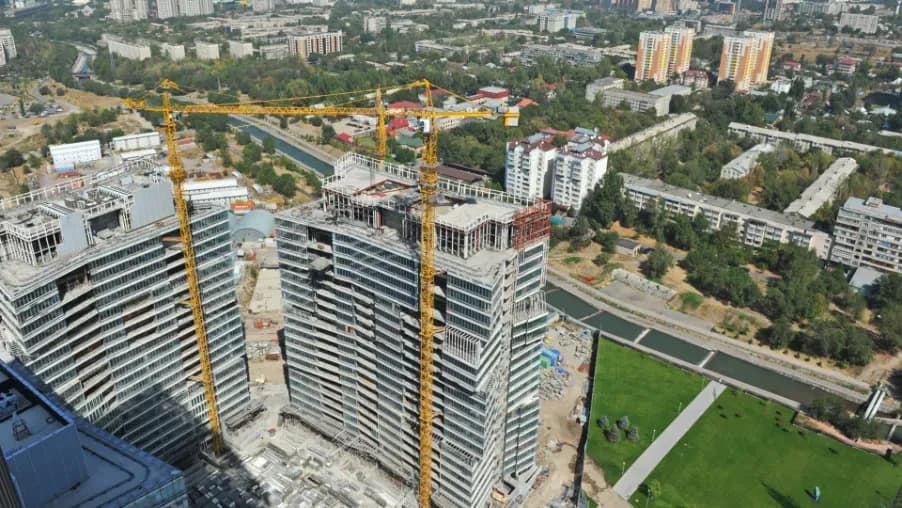

Kazakhstan is entering a significant phase of economic transformation, as expanding international trade routes and an ambitious infrastructure investment programme place the Central Asian nation at the centre of a changing Eurasian economic landscape. Positioned between China and Europe, Kazakhstan is increasingly seeking to establish itself as more than a geographical transit point, with ambitions to become a major logistics, construction and industrial investment destination. Two developments are particularly important to this ambition: the growing influence of the Middle Corridor and the government's newly announced infrastructure modernisation programme worth approximately $14.27 billion.
The combination of strategic transport investment and large-scale domestic construction could reshape Kazakhstan's economic prospects over the coming years. However, the country's ability to translate these ambitions into sustainable growth will depend on infrastructure delivery, international cooperation, private-sector participation and the development of industries beyond traditional commodity exports.
The Middle Corridor, formally known as the Trans-Caspian International Transport Route, is gaining importance as international businesses and governments seek alternative supply-chain connections between Asia and Europe. The route connects China and Central Asia with the Caspian Sea, Azerbaijan, Georgia, Türkiye and European markets. Kazakhstan occupies a strategically important position within this network, providing the railway connections and port infrastructure needed to move goods westwards.
Changing geopolitical conditions, supply-chain diversification and the demand for more resilient international trade networks have increased interest in alternative Eurasian transport routes. Although the traditional northern route through Russia remains an established logistics connection, the Middle Corridor offers businesses another option, potentially reducing dependence on individual transit networks.
Recent developments demonstrate the route's growing commercial relevance. Kazakhstan's Ministry of Trade and Integration reported in May 2026 that freight volumes along the Middle Corridor increased by 62% in 2025. Container transportation also expanded substantially, reaching 56,500 twenty-foot equivalent units (TEUs), representing a 2.7-fold increase. The country's longer-term ambition is to raise annual corridor capacity to 10 million tonnes by 2030, compared with approximately six million tonnes currently.
The momentum has continued into 2026. According to figures attributed to Kazakhstan's national railway operator, container transit on the route reached 44,200 TEUs between January and August, a 58% increase compared with the corresponding period in 2025. The figures indicate growing demand for the corridor, although sustained expansion will require additional capacity across the entire transport network.
Kazakhstan's strategy extends beyond increasing freight volumes. The government is investing in railway connections, maritime facilities, highways, border crossings and logistics centres to improve the efficiency of international transportation.
The development of the Aktau and Kuryk ports on the Caspian Sea is particularly important. These facilities provide essential connections between Kazakhstan and the South Caucasus, creating a bridge between Central Asian railway networks and onward maritime transportation. Aktau International Sea Trade Port has an annual cargo-handling capacity of approximately 12 million tonnes, making it a significant component of the country's westward trade ambitions.
Railway expansion is another major priority. The planned Bakhty–Ayagoz railway in eastern Kazakhstan is expected to add approximately 20 million tonnes of annual freight capacity between Kazakhstan and China when it becomes operational in 2027. Meanwhile, the Moiynty–Kyzylzhar railway development is designed to improve capacity along a critical section of the Middle Corridor. The Asian Infrastructure Investment Bank approved $564 million in financing support for the first phase in March 2026, alongside a World Bank guarantee arrangement of up to $846 million.
Another significant development is the Aral–Caspian transport corridor, construction of which began in August 2026. The proposed route is expected to shorten the relevant China–Europe land freight journey by approximately 1,000 kilometres and reduce delivery times by up to three days, depending on the logistics route used. If delivered successfully, it could improve the competitiveness of Kazakhstan's western transport connections and strengthen links between inland production centres and Caspian ports.
Nevertheless, physical construction alone cannot guarantee the corridor's success. Different railway operators, shipping companies, customs authorities and national transport agencies must coordinate their activities. Differences in documentation, border procedures, freight tariffs and operating schedules can create delays that undermine the advantages of faster infrastructure.
A September 2026 World Bank report, Integration: World-Class Trade Logistics Along the Trans-Caspian Transport Corridor, highlights the scale of the opportunity. Its analysis suggests that targeted infrastructure investment could more than triple trade volumes along the corridor, halve travel times, increase the combined GDP of participating countries by 3.3% and create two million additional jobs by 2040. However, achieving these outcomes will require at least $25 billion in physical infrastructure investment and an estimated further $30 billion in supporting investments, including logistics hubs, inland terminals and digital systems.
On 28 October 2026, President Kassym-Jomart Tokayev outlined the proposed People's Construction initiative as part of his State of the Nation Address. The programme forms part of an Infrastructure Modernisation Plan supported by approximately 6.5 trillion tenge, equivalent to $14.27 billion, from the National Fund through the end of 2029. Of this amount, 1.5 trillion tenge, approximately $3.29 billion, is earmarked for social infrastructure projects during 2026 and the first two months of 2027.
The proposed investment covers several essential areas of development, including healthcare, education, housing, transport, utilities, gas distribution and access to safe drinking water. Initial plans include approximately 70 healthcare facilities and around 50 educational, sporting and cultural institutions. The government is also seeking to improve essential services in communities where infrastructure remains inadequate.
The programme is significant because it connects economic development with the everyday needs of households and regional communities. New hospitals, educational institutions and improved utilities can strengthen public services, while road and transport improvements can support businesses, employment and regional commercial activity.
Construction activity could also generate opportunities for domestic contractors, engineering companies, building-material manufacturers and smaller suppliers. The government's intention to involve qualified local small and medium-sized enterprises is particularly relevant, as it could help ensure that public investment generates economic activity within Kazakhstan rather than relying excessively on imported construction services and materials.
However, the scale of the programme also raises important questions about financing, project selection and implementation. Drawing heavily on the National Fund requires careful financial management, particularly when public investment must compete with other national priorities. President Tokayev has emphasised that government funding should help attract private investment rather than replace it, highlighting the importance of long-term financing and commercial participation.