
Chile’s Lithium Leap: Can White Gold Become a Battery Powerhouse?

Chile has long possessed one of the world’s most valuable assets in the energy transition: lithium. But as electric vehicles, grid-scale storage and advanced batteries reshape the global economy, simply extracting lithium and exporting processed chemicals may no longer be enough. The more consequential question is whether Chile can turn its resource advantage into a broader industrial advantage by capturing more value across the battery supply chain.
The opportunity is significant. Chile remained the world’s third-largest lithium producer in 2025 and, according to Chile’s Subsecretariat for International Economic Relations, accounted for 46% of global exports of lithium carbonate and lithium hydroxide. Lithium-equivalent exports reached 321,695 tonnes in 2025, while volumes during January-April 2026 were 43% higher than in the same period a year earlier.
Yet these figures also reveal the central challenge. Chile is already exceptionally important in the upstream and chemical-processing stages, but much of the higher-value battery ecosystem remains elsewhere. China, South Korea, Japan and other Asian economies dominate much of the refining, cathode, cell manufacturing and battery technology landscape. In 2025, Asia absorbed around 95% of Chile’s lithium exports, with China alone accounting for 67%.
Chile’s National Lithium Strategy is designed to address precisely this structural gap. The policy envisages a greater state role while bringing private capital, technology and international expertise into the industry. Its stated ambition extends beyond extraction towards technological development, value addition, research, sustainability and the creation of productive chains around lithium. That approach is becoming increasingly visible. In December 2025, Codelco and SQM formally established NovaAndino Litio, a public-private partnership intended to develop lithium activities in the Salar de Atacama through 2060. The arrangement combines state participation with SQM’s operational experience and is intended to provide a long-term platform for Chile’s lithium industry.
The significance goes beyond one partnership. Chile is attempting to create a model in which the state retains strategic influence while private companies provide capital, technology, market access and operational expertise. If successful, that model could help Chile attract investment into areas that sit further downstream from the salt flats. The country is also widening its geographical and corporate base. In February 2026, Codelco secured the definitive contractual framework to advance lithium exploration and production at the Maricunga salt flat in the Atacama Region. The project is expected to operate from 2030 and forms part of the National Lithium Strategy’s effort to expand production beyond the traditional Salar de Atacama operation.
More recently, Chile demonstrated that its lithium ambitions are not limited to large state-linked projects. In August 2026, the government signed its first CEOL lithium operating contract exclusively with a private company. Quiborax’s project in Arica and Parinacota is expected to involve approximately US$70 million of investment and could produce up to 20,000 tonnes of lithium carbonate by recovering lithium from mining residues. The project is particularly notable because it links lithium development with a circular-economy approach rather than relying solely on conventional extraction.
The government has also been signalling a more investment-friendly direction. Speaking at ChileDay in London in September, Economy and Mining Minister Daniel Mas said Chile wanted to accelerate lithium investment and highlighted the potential for further partnerships between Codelco and private companies. The bigger economic prize, however, lies beyond lithium carbonate and lithium hydroxide. Chile needs to develop the industrial capabilities that connect raw materials with finished battery technologies.
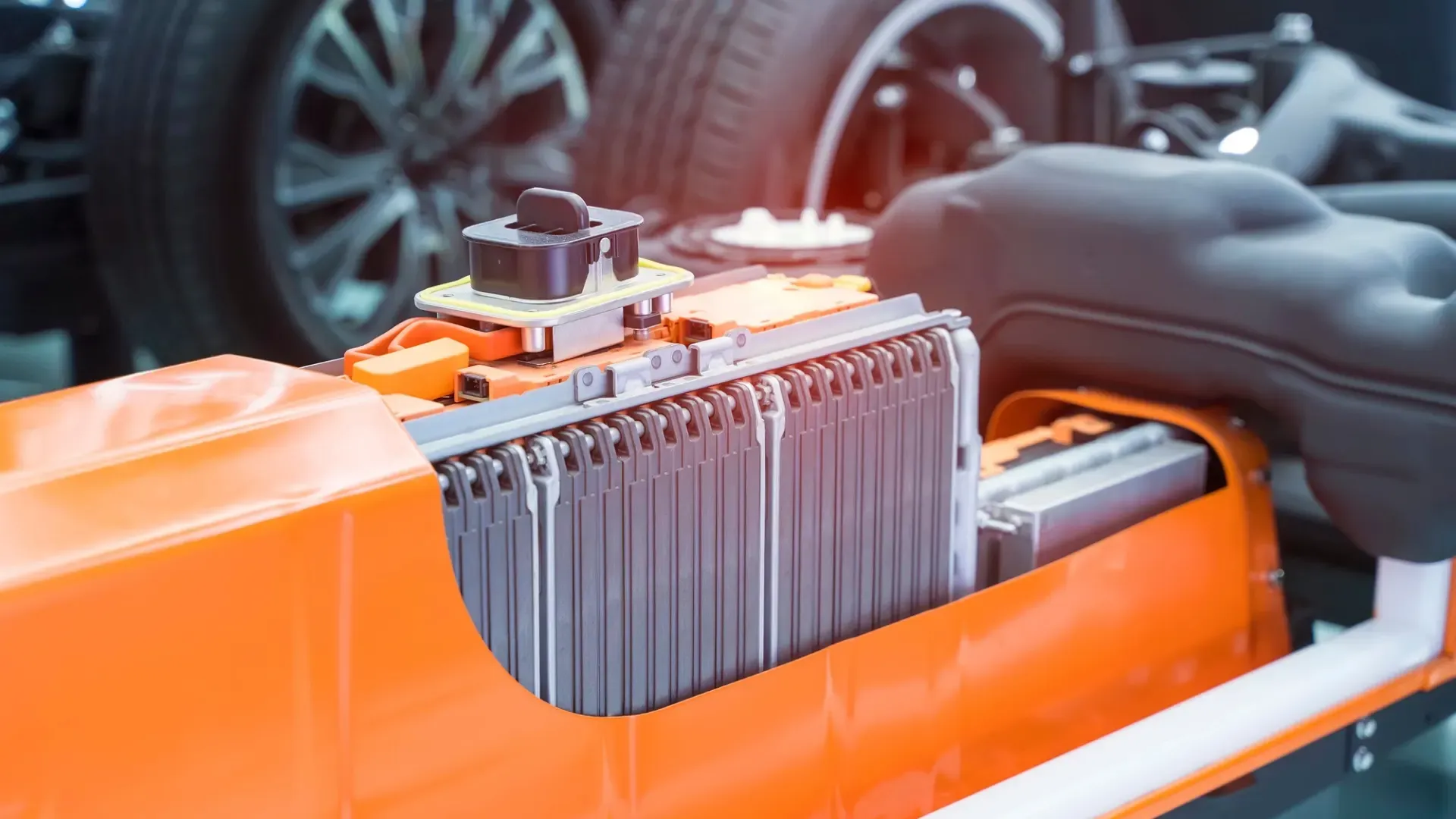
There are several possible steps. These include lithium-metal production, cathode materials, battery components, battery recycling, second-life applications and eventually cell manufacturing. Each stage requires more sophisticated engineering, research, skilled labour and infrastructure, but each can also capture considerably greater economic value. Chile has already recognised this. CORFO has promoted programmes aimed at attracting companies capable of producing value-added lithium products domestically, including precursors, cathode materials, battery cathodes, lithium-metal products and other lithium-based applications. The initiative also seeks to create local technological capabilities and stronger industrial linkages.
This could become one of the most important tests of Chile’s industrial policy. The country does not necessarily need to build an entire battery ecosystem alone. Instead, it could specialise in strategically valuable parts of the chain where its lithium resources, renewable-energy potential, mining expertise and existing industrial infrastructure provide a competitive advantage. Innovation may prove particularly important. Chile has already directed public resources towards research into lithium-metal production and advanced battery applications, while also exploring the reuse of electric-vehicle batteries for stationary energy storage. Such initiatives indicate an ambition to develop knowledge and technology around lithium rather than treating the mineral purely as an export commodity.
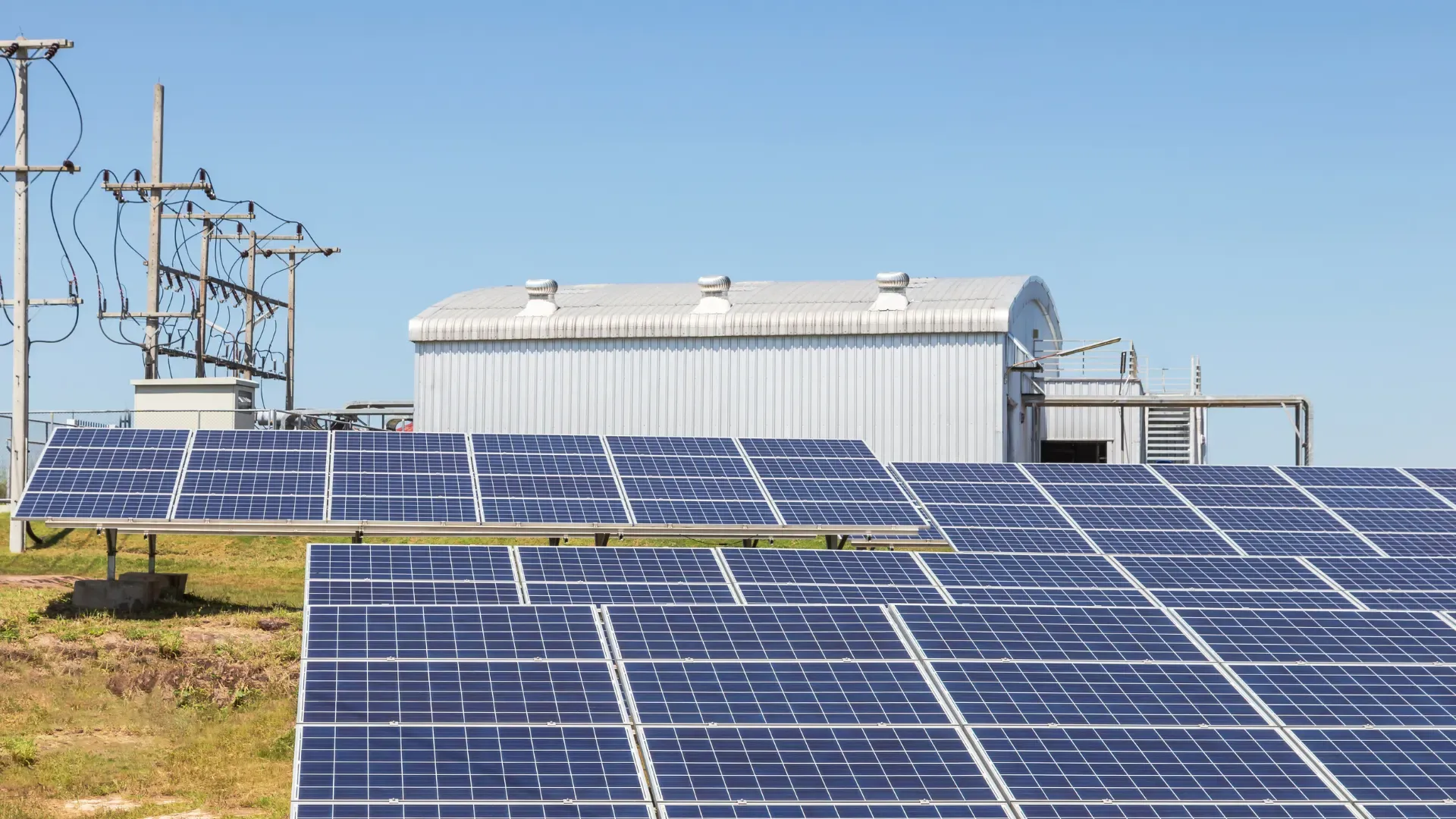
That matters because the next phase of the battery economy will not be defined solely by the volume of lithium produced. Technology, processing efficiency, environmental performance and the ability to manufacture specialised materials could increasingly determine where economic value is captured. Chile’s abundant renewable-energy resources could also provide an advantage. The country is already developing large-scale battery storage projects. In June 2026, Spain’s Grenergy inaugurated the Elena battery-storage plant in Antofagasta as part of its US$2.5 billion Oasis de Atacama initiative, illustrating the potential for Chile to become not only a supplier of battery minerals but also a significant market for energy-storage technologies.
Chile cannot assume that its resource position will guarantee long-term dominance. Global lithium production is becoming more geographically diverse, with Argentina, Brazil, Canada, China, Mali, Zimbabwe and other emerging producers increasing competition. Chile’s own government has acknowledged that the market is becoming more competitive as supply expands and prices become less predictable.
This makes value addition more urgent. Commodity markets can deliver substantial revenues during periods of strong prices, but they can also expose producers to sharp cycles. In 2025, Chile exported more lithium by volume but generated less export revenue than in 2024 because of lower international prices. The country’s average lithium carbonate export price subsequently strengthened in the first quarter of 2026, rising 91% year on year to US$14,547 per tonne. Moving further downstream could provide Chile with a more diversified economic base and reduce its dependence on fluctuations in the price of a single intermediate commodity.
There is another dimension Chile cannot overlook: environmental credibility. Lithium production from salt flats has raised questions around water, ecosystems and relationships with local and Indigenous communities. Any attempt to expand production while building a larger industrial chain will therefore depend on demonstrating that economic growth can coexist with environmental stewardship. Chile’s strategy explicitly incorporates sustainability, community participation, lower-impact technologies and research into salt-flat management. The success of these measures will influence not only domestic acceptance but also the attractiveness of Chilean lithium to global manufacturers increasingly concerned about the environmental footprint and traceability of their supply chains.