
From First Gas to a New Industrial Frontier: Can Beetaloo Build the Northern Territory’s Gas-Service Economy?

For more than a decade, Australia’s Beetaloo Basin has been discussed as a resource opportunity waiting to be unlocked. In September 2026, that narrative changed. Gas began flowing commercially from the Beetaloo into the Northern Territory network, turning a long-promised resource into an operating energy asset. The first production from Tamboran Resources’ Shenandoah South project is now supplying the Territory, creating a new chapter for one of Australia’s most closely watched gas developments.
The significance of Beetaloo, however, may extend well beyond the gas extracted from its wells. The emerging opportunity is the creation of an entire service economy around exploration, drilling, hydraulic stimulation, pipeline construction, engineering, logistics, equipment maintenance, environmental management and specialist technical services. If production expands as planned, the Northern Territory could gradually develop a locally anchored industrial ecosystem rather than simply becoming a producer of raw gas.
The September milestone provides an important foundation. Tamboran and its joint venture partner Daly Waters Energy began supplying approximately 40 terajoules of gas a day under a contract with the Northern Territory Government. Gas is transported through APA Group’s newly commissioned Sturt Plateau Pipeline before connecting with the existing Amadeus Gas Pipeline towards Darwin. That infrastructure matters because Beetaloo’s greatest commercial challenge has never simply been whether gas exists underground. It has been whether that gas can be produced economically and transported to customers from a remote part of the Territory.
The first production therefore represents more than an energy milestone. It creates an operating environment in which contractors, equipment suppliers, transport companies, engineering firms and other service providers can begin building repeatable businesses around a developing gas industry. The Northern Territory Government has already highlighted activity ranging from civil construction and transport to fabrication, testing and specialist services. More than A$1 billion has been invested in Beetaloo exploration, appraisal, production and infrastructure by companies including Tamboran, Santos and Beetaloo Energy and their partners.
Resource projects rarely create value solely through extraction. Their wider economic impact often comes from the supply chains that develop around them. Beetaloo could follow this model if drilling becomes sufficiently continuous to justify local investment in equipment, people and facilities. One early example is the emergence of an in-basin sand supply chain. Beetaloo Energy Australia has committed A$10.4 million towards establishing local frac-sand supply capabilities, potentially reducing the cost and logistical complexity of transporting critical hydraulic-fracturing materials across long distances.
This could prove strategically important. Industry participants have indicated that well costs in the Beetaloo remain significantly above those of mature US shale basins, while Reuters reported in September that developers believe costs may need to fall by roughly 40 to 60 per cent for the basin to achieve its full potential. Expanding local supplier networks, improving drilling efficiency and reducing long-distance transportation could therefore become central to commercial success. That creates an opening for Territory businesses. Heavy transport operators, mechanical workshops, accommodation providers, earthmoving contractors, fabrication companies, environmental consultants, water-management specialists, safety providers and engineering firms could all become part of a growing industrial supply chain.
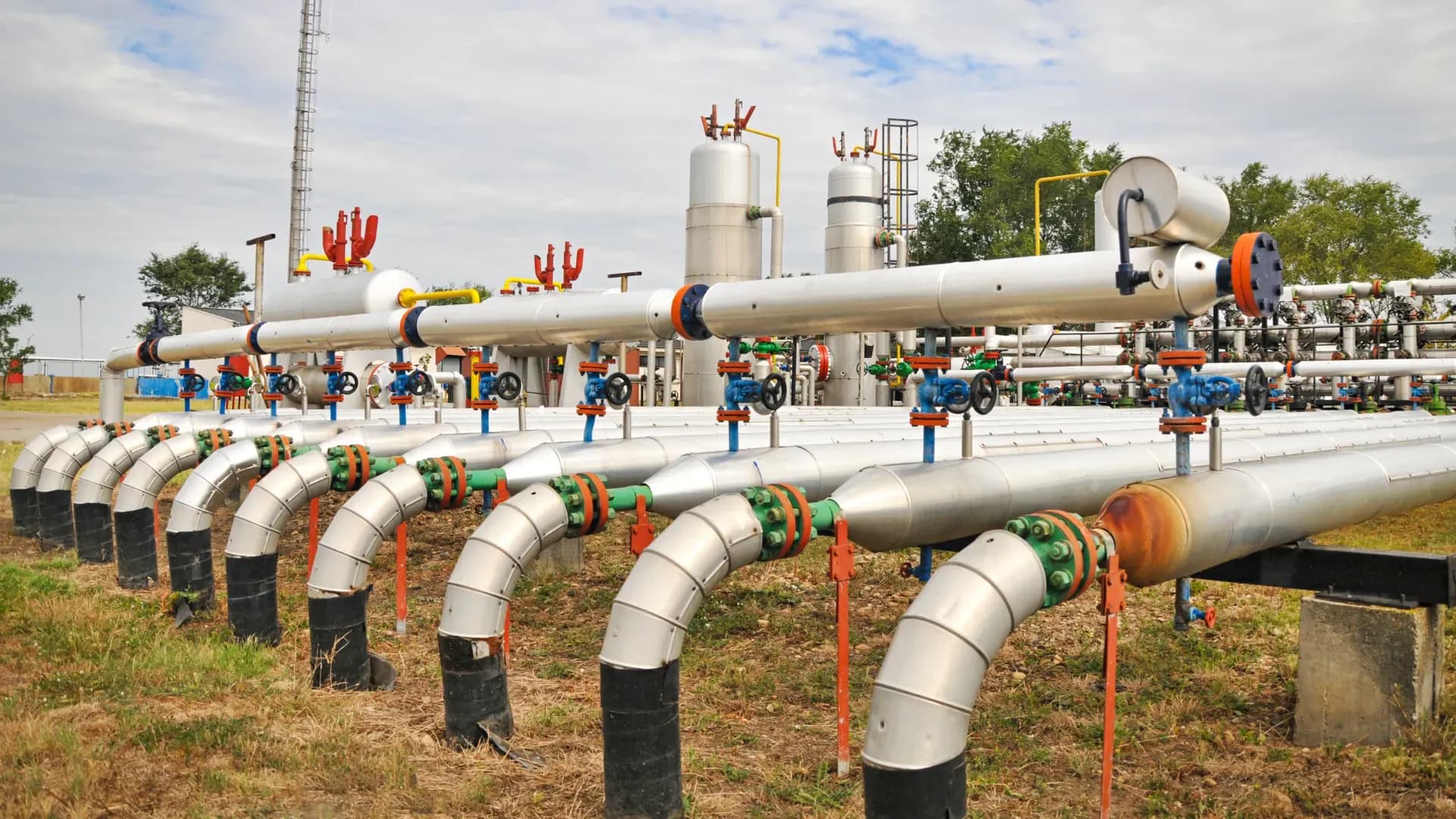
The next stage will depend heavily on pipelines. A 622-kilometre high-pressure pipeline proposal from the Beetaloo towards the Northern Territory–Queensland border is currently undergoing environmental consultation. The project includes compressor stations, access infrastructure and temporary construction facilities, illustrating the scale of supporting infrastructure required to connect the basin with wider Australian markets. Meanwhile, the proposed 670-kilometre Territory Energy Link is being positioned as a broader infrastructure corridor connecting the Beetaloo region with Darwin. The Northern Territory Government expects the corridor to be pipeline-ready by 2028, potentially supporting gas, water and optical-fibre infrastructure.
For the service economy, these projects could be as important as the wells themselves. Pipeline construction creates demand for surveying, civil works, transport, equipment hire, accommodation, fabrication, electrical services and ongoing maintenance. Once operational, infrastructure generates another layer of long-term technical and maintenance employment. The basin’s development is also broadening beyond Tamboran. Beetaloo Energy Australia is commissioning its Carpentaria Gas Plant in the fourth quarter of 2026, with first pilot gas sales planned at up to 25 terajoules a day into the Northern Territory domestic market under a long-term gas sales agreement. Its Carpentaria-5H well averaged 6.9 terajoules a day during a 30-day production test in June, providing further operational data on the resource.
Santos has separately begun its Beetaloo appraisal campaign, drilling its first appraisal well in September. The company says its acreage has the potential to support substantial LNG production while serving northern and east-coast domestic markets. INPEX has also entered prospective Beetaloo acreage, demonstrating interest from major international energy players. This diversification matters. A single operator can support a project, but multiple developers create the conditions for a genuine industry. Perhaps the most intriguing development is that Beetaloo gas could support industries far removed from conventional energy production.
In July, the Northern Territory Government granted Beetaloo Digital an exclusive commitment over 185 hectares at Weddell, near Darwin, for a proposed integrated gas-to-power and hyperscale data-centre development. The project could involve up to two large data-centre campuses powered by as much as 2GW of on-site gas-fired generation, with the company estimating potential private investment of up to A$40 billion at full development.
The proposal remains subject to feasibility work and regulatory approvals, so it should not be confused with a committed A$40 billion investment. Nevertheless, it illustrates the broader economic proposition: Beetaloo gas could become an input into digital infrastructure, rather than simply being sold as a commodity. That possibility is particularly relevant as artificial intelligence increases demand for reliable electricity and data-centre capacity. Northern Australia’s abundant land and proximity to Asian markets could become more attractive if energy infrastructure develops alongside digital investment.
The opportunity is substantial, but the business case is not guaranteed. Beetaloo remains geographically remote, and large-scale pipeline infrastructure requires significant capital. Developers also need to demonstrate that wells can produce consistently and economically at scale.
Recent debate has highlighted the difference between the basin’s enormous geological potential and its immediate commercial output. Government projections of thousands of jobs and billions of dollars in economic value depend on production expanding considerably beyond the initial 40-terajoule-a-day project now operating. Critics have questioned whether some long-term economic estimates assume production levels that have yet to be demonstrated. That distinction is crucial for the emerging service economy. Local businesses cannot build capacity on geological potential alone. They need sustained drilling programmes, long-term contracts and predictable investment.