

US Cigarette Maker Altria And Japan Tobacco Consider Acquiring Britain’s Imperial Brands

US tobacco group Altria is considering an all-cash bid for British tobacco group Imperial Brands and has been in talks with another party about the takeover. Japan Tobacco is also a potential contender for this bid. These three companies account for a majority share in the global cigarette market, and if finalised, this deal could be the biggest one in the history of the tobacco industry.
Imperial’s shares jumped 13.8% to £34.49, raising the London-listed company’s market value to £25.90 billion. The finalisation of this deal could make Altria the second-most valuable listed tobacco company worldwide, behind Philip Morris International (PMI). Currently, British American Tobacco occupies the second position.
The deal could also be structured to facilitate Japan Tobacco’s acquisition of Imperial, most likely with a partner, with assets being split up around the world. A coordinated US-Japanese venture could help dodge antitrust objections and also solve any strategic challenges.
There is a decline in the worldwide smoking rate, which has left cigarette producers with no choice but to find different avenues to expand their business. Tobacco companies are also struggling to find newer nicotine products which customers prefer. Nonetheless, these new products like vapes, nicotine pouches and heated tobacco products do not make up for the loss of cigarette sales.
While Japan Tobacco has not publicly commented on the takeover speculation, Imperial’s board released a statement denying that it is in discussions with Altria or any other company over a sale. The company maintained that it remains committed to maximising shareholder value and will consider any proposal if and when it is made. To buy out Imperial would give any company access to its portfolio of cigarette brands spanning Europe and the US, like Davidoff, Gauloises and Kool, which are in every other part of the world.
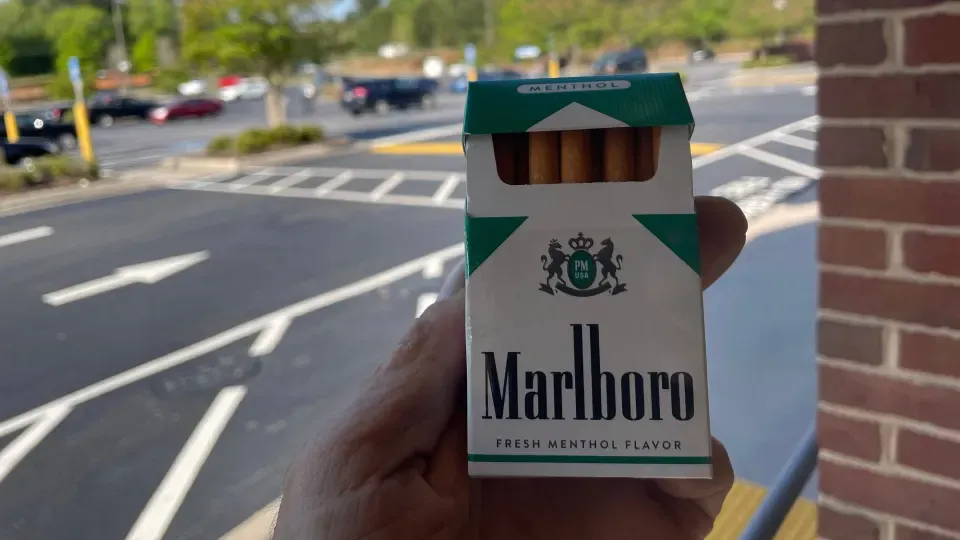
For Altria, this takeover would mark its return to the international market. The US Marlboro maker exited the global market twenty years ago to focus on the American market alone, which propelled PMI to become the number one cigarette brand globally. Having only operated domestically for the past two decades, Altria’s sudden decision to expand overseas leaves it vulnerable to several risks, particularly as the global economy is navigating some turbulent times.
Although it operates only within the US, Altria’s market value is $126.89 billion, compared to Japan Tobacco, which is valued at $69.45 billion despite establishing its presence in over 130 markets and selling cigarette brands like Camel and Benson & Hedges.
London-listed companies have become an attractive target for overseas buyers in the past few years, owing to depressed valuations compared to their rivals listed in other European or US exchanges. Should the Imperial deal go through, it would be one of the largest acquisitions of a British business by a foreign company.
Financial analysts are predicting that the total number of M&A deals this year could surpass the record-breaking 2021 global haul despite many pullbacks amid rising rates. Imperial’s adjusted operating profit through September 2026 was $5.42 billion, while Japan Tobacco’s and Altria’s adjusted profits were $3.20 billion and Altria’s was $9.15 billion respectively till December 2025.
PMI and British American Tobacco are far ahead of Imperial, Japan Tobacco and Altria in expanding beyond traditional tobacco, and any attempts made by these companies to move beyond their primary products have had mixed results. These three cigarette-makers are in a tough financial spot caused by industry transitions, which is hindering their ability to compete with the top two firms.
If Altria and Japan Tobacco decided to jointly acquire Imperial, it would not be the first time these two companies would be pairing up, having created a joint venture in 2022 to grow newer product lines. Japan Tobacco has also been gaining a considerable market share in the US through its cheaper labels, a strategy which has benefited Imperial in the past.