

Brazil's Biofuel Revolution: Fuelling the Future of Green Aviation and Renewable Energy
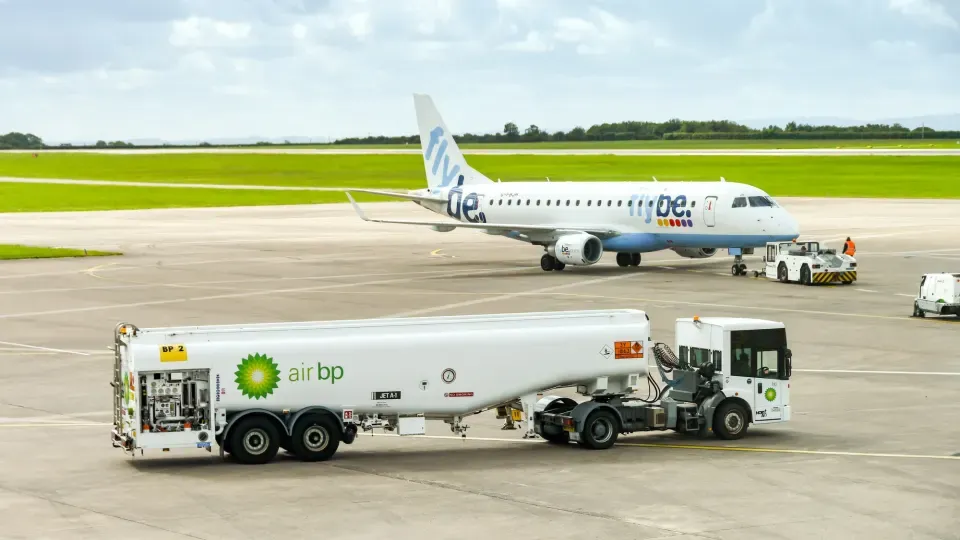

Brazil is positioning itself at the forefront of the global energy transition, with its expanding biofuel industry attracting significant investment and creating new opportunities across aviation, transport and industrial energy. Supported by its agricultural resources, established ethanol production network and ambitious clean-energy policies, the country is seeking to transform its traditional biofuel leadership into a much larger role in the international market for sustainable aviation fuel (SAF) and renewable diesel.
With an estimated investment opportunity of $25.8 billion associated with this emerging market, Brazil is entering a crucial phase in which agricultural production, industrial innovation and international energy demand are converging.
The significance of this development extends beyond the domestic energy market. As airlines, shipping operators and transport companies face increasing pressure to reduce carbon emissions, alternative fuels are becoming an increasingly important part of long-term decarbonisation strategies.
Brazil's ability to produce renewable fuels at commercial scale could strengthen its position as a strategic supplier to international markets, particularly Europe and North America, where demand for lower-carbon aviation and transport fuels is expected to expand.
At the centre of this transformation is Brazil's ability to build upon an agricultural and industrial foundation that has developed over several decades. The country is already one of the world's leading producers of sugarcane ethanol, while its expanding corn-based ethanol industry is creating additional opportunities for renewable fuel production.
These established supply chains provide an important advantage over countries that must develop their biofuel infrastructure almost entirely from the beginning. Brazil can draw upon extensive agricultural expertise, existing processing facilities, established distribution networks and a sizeable domestic market to accelerate the development of advanced biofuels.
According to Brazil's Energy Research Office (EPE), investment in the country's biofuel sector could reach R$142 billion between 2027 and 2036, equivalent to approximately US$25.8 billion at an indicative exchange rate. The estimate covers ethanol, biodiesel, biomethane, sustainable aviation fuel and renewable diesel. Importantly, SAF and renewable diesel projects alone account for approximately R$39 billion of the projected capital expenditure, demonstrating how the next generation of renewable fuels is becoming an increasingly important investment category.
The projections also indicate that the sector's operating and maintenance expenditure could reach approximately R$1.2 trillion over the same period. The figures highlight an important distinction: Brazil's $25.8 billion opportunity represents investment across the broader biofuel industry rather than exclusively in aviation fuel and renewable diesel.
Nevertheless, the scale of the projected spending demonstrates the potential for Brazil to become a major international production centre for low-carbon fuels. Government policy is playing a decisive role in accelerating Brazil's renewable fuel ambitions.
The introduction of the Fuel of the Future Law in October 2024 established a broader regulatory framework designed to encourage investment in ethanol, biodiesel, sustainable aviation fuel, green diesel and biomethane. The legislation is particularly important because it seeks to address one of the industry's biggest challenges: providing investors with greater certainty about future demand.
Under the framework, Brazil established the National Sustainable Aviation Fuel Programme, known as ProBioQAV, which introduces mandatory greenhouse gas emissions-reduction targets for domestic aviation operations. The programme begins with a minimum 1% reduction from January 2027, with the requirement gradually increasing to 10% by 2037.
These targets are intended to encourage airlines to incorporate sustainable aviation fuel into their operations while supporting the development of domestic production capacity. The government has also strengthened the country's wider renewable fuel market through higher blending limits.
In June 2025, the National Energy Policy Council approved an increase in the mandatory ethanol content of petrol from 27% to 30%, alongside an increase in the biodiesel content of diesel from 14% to 15%. Such measures reinforce the importance of renewable fuels in Brazil's domestic energy system and create additional opportunities for producers, agricultural suppliers and technology companies.
A further regulatory development arrived in August 2026, when the government issued regulations implementing ProBioQAV. The framework introduced certification arrangements and a book-and-claim mechanism, allowing the environmental attributes associated with sustainable aviation fuel to be accounted for separately from the physical delivery of fuel. This could provide airlines with greater flexibility in meeting their emissions obligations while encouraging investment in production facilities.
Aviation represents one of the most challenging sectors to decarbonise. Unlike road transport, where electric vehicles are increasingly commercially viable, long-distance aviation remains heavily dependent on liquid fuels because of the energy-density requirements of aircraft. Sustainable aviation fuel therefore offers an important pathway towards reducing emissions without requiring the immediate replacement of existing aircraft fleets or airport refuelling infrastructure.
Brazil's agricultural resources give it a competitive advantage in this emerging market. Sugarcane ethanol, corn ethanol, soybean oil and used cooking oil can provide feedstocks for different renewable fuel production pathways, subject to technical specifications and sustainability certification. Among these technologies, alcohol-to-jet (AtJ) converts ethanol into aviation fuel, while hydroprocessed esters and fatty acids (HEFA) processes oils and fats into renewable hydrocarbons.
The country's developing industrial landscape already includes several substantial projects. Acelen Renewables, backed by Abu Dhabi's Mubadala Investment Company, has secured approximately US$1.5 billion in financing for its renewable fuels biorefinery in Bahia.
The facility is designed to produce around one billion litres of sustainable aviation fuel annually, with operations targeted for 2029. Its planned feedstock mix includes soybean oil and used cooking oil, with future ambitions to incorporate macaúba palm oil. The project is particularly significant because it demonstrates how international capital is supporting Brazil's ambitions to become a major exporter of renewable aviation fuels. Its financing consortium includes international institutions such as HSBC, the International Finance Corporation and the Asian Infrastructure Investment Bank, alongside other financial partners.
Another important development is the expansion of Petrobras into dedicated renewable fuel production. In June 2026, the company approved an investment of approximately US$1.2 billion for its RPBC biorefining project at the Presidente Bernardes Refinery in Cubatao, São Paulo.
The facility is expected to produce up to 15,000 barrels per day of renewable fuels, including bio-jet fuel and renewable diesel, with operations scheduled to begin in 2030. Petrobras' involvement is strategically important because the company already possesses substantial refining expertise, industrial infrastructure and access to established energy distribution networks. Its investment could help bridge the gap between conventional petroleum refining and the emerging renewable fuel economy.